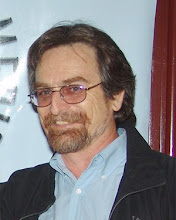
I was told recently that there is not enough humor in the world, so I thought this would be a nice change from the 'deep thought' normally offered here.
While looking for a certain product to help with sleep apnea to send my dear elder auntie for her son, I chanced on this website that immediately threw up a window saying, “Wait! Our agent would like to talk to you. Please click 'CANCEL' on the next window to chat with our agent.”
So, accustomed to using Skype to talk to friends abroad, I out on my headset in hopes of hearing a person at the other end of the line. Instead, I found myself in a ‘live chat’ session with 'Heather,' the promised agent. This is the conversation that ensued.
Heather says: Don't leave yet! If you want a restful night's sleep CLICK HERE so everybody gets a good nights sleep. We feature a 90-day money back guarantee.
Heather says: Order now and we'll include a Bonus: [first bonus] DVD + [second bonus] book at NO EXTRA CHARGE.
You: you don’t need to shout. i’m right here
Heather says: I'm not sure I can help. You should call at XXX-XXX-XXXX and an agent will be glad to help you.
You: who are you
Heather says: I am a help agent, my name is Heather and I can answer most of your questions.
You: most?
Heather says: I'm not sure I can help. You should call at XXX-XXX-XXXX and an agent will be glad to help you.
Heather says: Wouldn't you love a great night's sleep? What are you waiting for CLICK HERE and order now so everybody gets a good nights sleep.
You: you do know that there's an apostrophe after the "t" in "night's"
Heather says: I'm not sure I can help. You should call at XXX-XXX-XXXX and an agent will be glad to help you.
You: you’re kinda ducking your job here, heather – pushing me off on someone else…
Heather says: yes
You: why is that?
Heather says: I'm not sure I can help. You should call at XXX-XXX-XXXX and an agent will be glad to help you.
You: there you go again
Heather says: I'm not sure I can help. You should call at XXX-XXX-XXXX and an agent will be glad to help you.
You: ai, yai, yai
Heather says: To order over the phone just call us at XXX-XXX-XXXX.
You: been looking for someone to talk to about representing the product. who might that be?
Heather says: To order over the phone just call us at XXX-XXX-XXXX.
You: you are a robot
Heather says: Of course I'm not real but wish I were :)
Heather says: I can answer most of your questions though.
You: no i need a person
Heather says: Sorry I didn't understand.
You: pretty good for a robot though
Heather says: Of course I'm not real but wish I were :)
Heather says: I can answer most of your questions though.
You: oops. i found your glitch ha ha
Heather says: Surgeons have discovered that snoring can kill. Stop snoring now.
You: i'm not snoring NOW… i only snore when i sleep
Heather says: I'm not sure I can help. You should call at XXX-XXX-XXXX and an agent will be glad to help you.
You: no i don't need any help snoring – I snore pretty well on my own, but thanks
Heather says: Of course I'm not real but wish I were :)
Heather says: I can answer most of your questions though.
You: yah, you told me that
Heather says: I can try to help, just ask me a question.
You: how old are you anyway?
Heather says: I'm fine, a little closed in today though.
You: must be close quarters for you, stuffed there in the motherboard
Heather says: I'm not sure I can help. You should call at XXX-XXX-XXXX and an agent will be glad to help you.
You: yah, but how old are you?
Heather says: I'm fine, a little closed in today though.
You: we covered that already. i got it, i got it
Heather says: I'm not sure I can help. You should call at XXX-XXX-XXXX and an agent will be glad to help you.
You: broken record?
Heather says: I'm not sure I can help. You should call at XXX-XXX-XXXX and an agent will be glad to help you.
You: much more of this conversation and i will be snoring
Heather says: Don't let snoring ruin your sleep. Get the [product name] and put an end to a bad night's sleep. CLICK HERE to order now.
You: have you whitened your teeth? they look pretty white in the picture
Heather says: I'm not sure I can help. You should call at XXX-XXX-XXXX and an agent will be glad to help you.
You: no, if I decide to whiten my teeth, i’ll go to a dentist
Heather says: Are you still there? Type "Hi" or "Hello" just to let me know.
You: hi
Heather says: Thanks! There's nothing worse than not getting a good night's sleep. If you are serious about feeling rested in the morning then order now by CLICKING HERE. [this product] is not sold in stores.
You: do you have apnea?
Heather says: [product name] can treat apnea but you should of course consult your physician. We offer a money back guarantee so CLICK HERE and start getting a better night's sleep.
You: do you use one?
Heather says: I'm not sure I can help. You should call at XXX-XXX-XXXX and an agent will be glad to help you.
You: does your boyfriend use one?
Heather says: Many people buy [product name] for their partner. Why not give it a try? We offer a money back guarantee.
You: got a boyfriend?
Heather says: I'm not sure I can help. You should call at XXX-XXX-XXXX and an agent will be glad to help you.
You: if you had a boyfriend, he'd be just some bytes stuffed in the motherboard too, wouldn't he?
Heather says: I'm not sure I can help. You should call at XXX-XXX-XXXX and an agent will be glad to help you.
You: girlfriend?
Heather says: I'm not sure I can help. You should call at XXX-XXX-XXXX and an agent will be glad to help you.
You: yah, it's hard being helpless.
Heather says: I'm not sure I can help. You should call at XXX-XXX-XXXX and an agent will be glad to help you.
You: ok, bye...
Heather says: You'll find [product name] is comfortable and effective. There's nothing worse than not getting a good night's sleep. CLICK HERE to order and I hope you start getting some rest.
You: ok, bye
Heather says: You'll find [product name] is comfortable and effective. There's nothing worse than not getting a good night's sleep. CLICK HERE to order and I hope you start getting some rest.
You: yah, i get it... bye now
Heather says: You've got nothing to risk with our money back guarantee, isn't a good night's sleep worth it? CLICK HERE to return to the site.
You: buh-bye!
[disconnect]
David Hakim is an assistant director, producer, and publicity expert who developed campaigns for every major Hollywood studio and handled publicity for the Motion Picture Academy. Find him in the Reel Directory online: www.reeldirectory.com.
All material copyright 2008 David Hakim and may not be duplicated - ALL RIGHTS RESERVED.
viernes, 29 de mayo de 2009

miércoles, 27 de mayo de 2009
Hidden Messages: Turns Out Road Rage Display Behavior Is Misunderstood!
Came across this piece by my very talented friend, David Roland, and thought I'd share it here, where it might do some of my readers some good.
Road Rage Display Behavior Finally Explained
by David Roland
While we think we know what the underlying messages that aggressive drivers are displaying, two researchers at the California College of Business Synergy in Berkeley have uncovered the actual meanings of the gestures and other non-verbal communications that angry drivers display.
The two young scientists took life and limb into their own hands during the 26-week study, by interviewing drivers displaying road rage just after each of those drivers was involved in an aggressive incident.
Thomas Hodgkins and Cecily Blazold spent major portions of each day driving around, encountering various forms of road rage behavior, attempting to interview the subjects displaying road rage behaviors, then analyzing their data according to the latest theories and discoveries in psychoanalysis. For six long months, they gave up all vestige of a social life to spend time driving around the Bay Area. (The study would have been conducted more quickly, except that they were involved in three separate accidents with drivers who accidentally ran them off the road while they were endeavoring to commence the interviews.)
All the work done by the intrepid young researchers was videotaped for later study, and the tapes catalogued for various behavior types and situations. In the safety of their lab, it is quite entertaining to witness these incidents on tape and to hear the remarks made by seemingly enraged drivers. “But you can’t really rely on their verbal communications to give you a true picture,” says Hodgkins. “It’s very much like people being interviewed about their significant others, in the presence of their significant others – there’s a lot going on under the surface, and people’s protective mechanisms just click into place.”
“That’s why we spent so much time conducting interviews,” continues Blazold. “You have to get the subject away from any reminder of the emotions, in order to get them to address their true feelings.”
Below are several examples of the actual translations these brave young scientists were able to parse from the thousands of gestures, gesticulations and other non-verbal clues they studies on the hundreds of hours of tapes they made during the study.
Middle finger of either hand, raised: “I have registered your disapproval and I agree that my actions are the direct cause of your annoyance. At some point when we have more time, we should discuss the matter in depth.”
Incessant honking of horn: “I find your current driving behavior distracting and potentially dangerous, and I fervently hope that you will take this admonition to heart and drive with more consideration in the future. Do have a nice day!”
Fist extended out of window, shaking back and forth: “I understand your consternation, but wish to point out that it is a big world and there are a lot of us in it, so you may have to make some adjustments in your expectations. I certainly hope things improve for you today!”
Aggressive Tailgating: “I would really rather that you use public transportation, as I feel you have become a menace to the safety of all concerned citizens. How about rethinking your position on carpooling and taking the bus?”
Aggressive Tailgating while flashing brights: “While I understand that one or more of your parents was born in an undeveloped country and that you are doing the best that you can behind the wheel of that car, still I must take that particular maneuver as an insult to all intelligent drivers, and ask that you forbear from making it in the future. I can recommend a good driving school that will make your life much easier and your time on the road much safer.”
Swerving next to car as if to run your vehicle off the road: “This is all very bothersome to me, and I am feeling especially vulnerable today, so please excuse my rudeness – I will no doubt feel much better after I’ve kicked my dog a few times. Perhaps in the future we can explore these feelings in a quiet atmosphere.”
These are only a few of the translations of signs given other drivers – signs that are often misunderstood and assumed to be aggressive or at least negative behavior. “All drivers should be aware that what they see is not always what the other driver is experiencing,” says Blazold, “and it probably would serve them to take into account that various signs and gestures may have different meanings to others.”
David Roland is a humorist who likes to make people wince as they are laughing - a rare trick. He is Hakim's close friend, and people who see them together should think carefully about the negative ramifications of calling them 'the two Daves.'
David Hakim is an assistant director, producer, and publicity expert who developed campaigns for every major Hollywood studio and handled publicity for the Motion Picture Academy. Find him in the Reel Directory online: www.reeldirectory.com.
All material copyright 2008 David Roland and may not be duplicated - ALL RIGHTS RESERVED.
Road Rage Display Behavior Finally Explained
by David Roland
While we think we know what the underlying messages that aggressive drivers are displaying, two researchers at the California College of Business Synergy in Berkeley have uncovered the actual meanings of the gestures and other non-verbal communications that angry drivers display.
The two young scientists took life and limb into their own hands during the 26-week study, by interviewing drivers displaying road rage just after each of those drivers was involved in an aggressive incident.
Thomas Hodgkins and Cecily Blazold spent major portions of each day driving around, encountering various forms of road rage behavior, attempting to interview the subjects displaying road rage behaviors, then analyzing their data according to the latest theories and discoveries in psychoanalysis. For six long months, they gave up all vestige of a social life to spend time driving around the Bay Area. (The study would have been conducted more quickly, except that they were involved in three separate accidents with drivers who accidentally ran them off the road while they were endeavoring to commence the interviews.)
All the work done by the intrepid young researchers was videotaped for later study, and the tapes catalogued for various behavior types and situations. In the safety of their lab, it is quite entertaining to witness these incidents on tape and to hear the remarks made by seemingly enraged drivers. “But you can’t really rely on their verbal communications to give you a true picture,” says Hodgkins. “It’s very much like people being interviewed about their significant others, in the presence of their significant others – there’s a lot going on under the surface, and people’s protective mechanisms just click into place.”
“That’s why we spent so much time conducting interviews,” continues Blazold. “You have to get the subject away from any reminder of the emotions, in order to get them to address their true feelings.”
Below are several examples of the actual translations these brave young scientists were able to parse from the thousands of gestures, gesticulations and other non-verbal clues they studies on the hundreds of hours of tapes they made during the study.
Middle finger of either hand, raised: “I have registered your disapproval and I agree that my actions are the direct cause of your annoyance. At some point when we have more time, we should discuss the matter in depth.”
Incessant honking of horn: “I find your current driving behavior distracting and potentially dangerous, and I fervently hope that you will take this admonition to heart and drive with more consideration in the future. Do have a nice day!”
Fist extended out of window, shaking back and forth: “I understand your consternation, but wish to point out that it is a big world and there are a lot of us in it, so you may have to make some adjustments in your expectations. I certainly hope things improve for you today!”
Aggressive Tailgating: “I would really rather that you use public transportation, as I feel you have become a menace to the safety of all concerned citizens. How about rethinking your position on carpooling and taking the bus?”
Aggressive Tailgating while flashing brights: “While I understand that one or more of your parents was born in an undeveloped country and that you are doing the best that you can behind the wheel of that car, still I must take that particular maneuver as an insult to all intelligent drivers, and ask that you forbear from making it in the future. I can recommend a good driving school that will make your life much easier and your time on the road much safer.”
Swerving next to car as if to run your vehicle off the road: “This is all very bothersome to me, and I am feeling especially vulnerable today, so please excuse my rudeness – I will no doubt feel much better after I’ve kicked my dog a few times. Perhaps in the future we can explore these feelings in a quiet atmosphere.”
These are only a few of the translations of signs given other drivers – signs that are often misunderstood and assumed to be aggressive or at least negative behavior. “All drivers should be aware that what they see is not always what the other driver is experiencing,” says Blazold, “and it probably would serve them to take into account that various signs and gestures may have different meanings to others.”
David Roland is a humorist who likes to make people wince as they are laughing - a rare trick. He is Hakim's close friend, and people who see them together should think carefully about the negative ramifications of calling them 'the two Daves.'
David Hakim is an assistant director, producer, and publicity expert who developed campaigns for every major Hollywood studio and handled publicity for the Motion Picture Academy. Find him in the Reel Directory online: www.reeldirectory.com.
All material copyright 2008 David Roland and may not be duplicated - ALL RIGHTS RESERVED.
sábado, 23 de mayo de 2009
Baby Boomers vs ‘The Greatest Generation’
Here's another piece from several years back that I would love to see become the basis of a documentary... kind of a Ken-Russell-meets-the-Yes-Men, done by Chris Guest and Eugene Levy. There is a lot here that could be explicated using humor, and it might make for a cultural healing, if only we would let the ideas do their work.
Not long ago, a national magazine published an article called ‘The Worst Generation,’ contrasting the Baby-boomer generation of Americans (born between the end of World War II and the early 60s) with ‘The Greatest Generation’ (those who fought in World War II). The article set out to cast ‘Boomers’ into the shadow formed by their parents, attempting to show the quality of the latter group and the inferiority of the former. I read that article with interest – possibly self-interest, having had the random luck of being born between the two arbitrary year markers set out to start a description of a huge segment of the population.
Unlike many of my fellow ‘Boomers,’ I was raised by my grandparents, and so came to a fuller perspective on life, a perspective which might even be said is akin to that of the ‘Greatest Generation.’ Along with that perspective, there came some reasoning power, some thought-strength which alerts me when the entire thesis of an argument is flawed.
Comparisons of groups of people are ticklish affairs. Even studies of large groups of disparate types of people can be hazardous to your thinking. False premises abound for the unwary. The first is that any group might be homogeneous. Boomers, whose birth-range covers 18 years, can’t possibly represent a single generation in education, cultural and social perspective, general emotional maturity, intent, or knowledge. It is also an absurdity to assume that any subgroup of Boomers (grouped by other demographic factors than age) would be alike in many areas, because the rapidly-changing dynamics of the times preclude that one group of people can have the same outlook and focus as a group born so long previous.
Another false premise is that any segment of Boomers, grouped by a closer age-range, could represent an homogeneous group. I went to school with Young Republicans, while I was a radical who opposed the Vietnam War on moral grounds. But I didn’t hide in the Ivy Tower – I came from a Navy family and would have gladly served my country in a legitimate war that wasn’t a sham, both politically and morally. In fact, it angered me that my military career was curtailed by our country’s egregious foreign policies, which only deteriorated as time went on until we find ourselves (under-equipped) in Iraq with no ‘exit strategy.’
Not every Boomer dropped acid, spurned lipstick, or burned a draft card wrapped in a bra. To assume otherwise is the logical fault of painting an entire group with the same brush. I grew up with echoes of World War II ringing in my ears, shooting capguns at ‘japs’ and ‘nazis’ before I even knew the meaning of those words (having learned a not-so-subtle racism from the much-lauded ‘Greatest Generation’). A kid born in 1960 was an altogether different creature from my friends and myself, and the gap would become more pronounced as time went on. That kid, or one born in 1964, would always know JFK as some kind of hero on a big coin, and was just three years old during the Summer of Love, never even contemplating actually having sex until the Sixties were long over.
The cultural drift many decry is the result of many things: the growth of corporations and the spread of patents (both dating from the late Renaissance), the threat of annihilation, the experimentation with the economy – not to mention advertising, the true locust-cloud of our time. It is actually thought itself which has changed: attitudes toward life and other humans, and the manner in which each person faces the life bestowed. As time has compressed, the number of things in the world has increased, and our institutions and ethics have had an effortful and unsuccessful time keeping up with those changes.
A twenty-year generational grouping was probably perfect back when time – and events – moved at a more leisurely pace. But with the coming of the 20th century, things changed. Long is the list the events which sped those changes: telegraph, telephone, electric lighting, indoor plumbing, medical and other technical advances like airplanes, war tanks, and automobiles. Perhaps it was fair to call a ten-year grouping a ‘generation’ in the Roaring Twenties, but it cannot be to do so now. And to call an 18-year grouping a ‘generation’ is silly beyond belief. I frankly wonder that so many otherwise intelligent people fall for that faulty logic.
I also wonder why people continue to insist on unfavorably comparing the ‘Boomers’ with ‘The Greatest Generation’ – and vice-versa. Is it some sort of age-old father/son competition? Persons who do so are buying into a profound conceptual folly, taking potshots at a crowd which must include at least some of their heroes as well.
Actually, ‘potshots at a crowd’ is almost the perfect metaphor for the entire Boomer situation – and for any argument that idealises one generation at the expense of another. That afternoon at Kent State was the mirror held up to our times: one group of kids (Boomers) shooting into another group of unarmed kids (Boomers). Who put those guns in the kids’ hands? Who trained them to shoot and to follow orders? Who gave the fatal orders? It is unlikely that Boomers could have done any but the last item, and improbable that they did even that. Those green young National Guardsmen were schooled and molded by members of the ‘Greatest Generation.’
And the mirror doesn’t lie: everything my ‘generation’ learned, we learned from our fathers - and mothers. We learned, we absorbed, we synthesized and extended. Yet Boomers have been described as self-centered and self-aggrandising. Self-centered? For many, the Fifties was a self-centered bath of personal comforts, prepared by those celebrating their survival of the ‘Great Depression’ and the War. Self-aggrandising? Isn’t aggrandisement of self the subtle heart of the incipient racism and classism of previous generations (extending back, in America’s case, to ‘the founding fathers’)?
Each generation takes what it can take from the pool and gives what it will give – right, wrong or indifferent. It isn’t so much about ‘us and them’ as about ‘all of us and these changing exigencies of our lives.’ There are good and bad elements in every ‘generation,’ and I hope that we do not teach purblindness to the generations with whose future thought processes we have been trusted. It is the responsibility and duty of our teachers to teach openly and fairly, withholding personal bias in favor of seeking all the facts, to guide young minds to think for themselves – rather than to accept the party line or the rantings of embittered politicos who may happen to be their professors. Only by keeping our universities free, by not trying to control content, can we hope to have future generations which will be better than we are, more able to cope with changes, more suited to the future which they will inherit.
But the whole argument about ‘Boomers vs The Greatest Generation’ is one big exercise in cheap generalities, careless thought and sloppy argument. No wonder the larger fraction of the American public can’t think clearly, fed as they are on disingenuous pap, propaganda disguised as opinion, outright lies by their ‘leaders’ (whether cultural or political). Of course, that is what the public wants, after all - to be led and cosseted, and told what to think and do. The media continues to present them with a collection of half-baked sentiments masquerading as thoughts and ideas. But I shudder to realise that our colleges and universities harbor professors indulging in carelessness, in the shoddy building of thesis and argument, resulting in enormous waste of creative power.
But there is a third false premise in the pitting of one generation against another, a mistake made in almost every anti-war movie ever produced: the demonisation of one side. How can the audience really feel the waste and tragedy of war when that emotion is pushed aside by a stronger visceral reaction, one engendered by a discernible villain to hate? By casting one ‘generation’ against another, we miss the entire point: all generations have their noble few, their plodding many, their great and silent apathetic masses. They all possess within them individuals who are greedy, as well as the guileless, the cynical, and the idealistic.
We are all of us human, all marked with the same tendencies and needs and wants. These traits are part of the human psyche. Victorian women in New York suffered lead poisoning from the white makeup they slathered on themselves in an attempt to ‘stay in fashion.’ Others bound their waists so tightly that they irreparably damaged their viscera. Can we really believe that every woman of our grandmothers’ (or great-grandmothers’) generation would have spurned breast augmentation or liposuction – had it been safe, inexpensive, and available to them?
It is true that recent generations were generally ‘given everything,’ where most previous generations grew up in harsher conditions. Boomers were presented with opportunities at every turn, and had them thrust on us by the world at large and by our parents, who were admittedly affected by previous privations that could not be ignored. Some kids were spoiled by their parents, while other parents took the absurd tack of emulating their kids, which often made them look ridiculous indeed.
The simple fact is that Boomers just became much more visible than any previous generation, as the spread of television and the globalisation of our culture thrust us into people’s living rooms every night on sitcoms, on the news, in movies and in magazines and newspapers. As a group, we became the center of attention, and don’t think some of us didn’t deliberately play to it for all it was worth. But that situation too serves to distort the facts. It made us seem more important than we actually were, a point readily made if one looks at one item generally taken to be an immanently ‘Boomer’ phenomenon – marijuana. An overview of the recent history of marijuana reveals immediately that the Boomers as a ‘group’ still haven’t got the political clout to legalise the damn stuff after almost 50 years of effort. If the thesis of ‘generational homogeneity’ were even close to true, we’d all be buying packages of ‘Blue Boo’ or ‘Gentle Gauge’ or ‘Happy Herb’ or ‘420’ cigarets at the corner store, paying a hefty use tax to the government. But we’re not – what’s that about?
Like most of American life, it’s probably all about issues, and the truth is that there is no single ‘American public’ viewing (or deciding) the issues. There are only a collection of ‘publics,’ overlapping, sharing interests in a broader or narrower fashion – but no one group can even begin to embody the contradictions of the ‘American’ mind. Notions of homogeneity are nonsense – and even dangerous when included in ‘discussions’ in national magazines or on TV.
Some of us were fighting against the Vietnam action long before it threatened us – like ’64 or ’65, when we were still in public schools, not yet shaving, unaware of the true reality of that awful threat. Without their kids providing a conscience – for whatever reason – most Americans might have shrugged off the atrocities in Southeast Asia as ‘the cost of doing business,’ just as they are today shrugging off the war in Iraq as ‘a necessary part of bringing democracy to the Middle East’ (and oil to the world).
Sex, drugs and rock ‘n’ roll weren’t invented by my ‘generation,’ though many of us often acted like they were. And there were a lot of fortysomethings crashing – and throwing – parties in the 60s and 70s. And yes, many Boomers did embrace Reagan’s rapacity (don’t forget that $3 trillion debt) – but they don’t represent the entirety of the ‘generation.’ And when we hear George W’s lectures on social responsibility, we have to remember that he personally has never shown any sort of fiscal responsibility and seeks to turn the entire country into Republicans through a variety of ‘parlor tricks.’
Of course, large parts of the ‘American public’ [not just Boomers] have said about Clinton, “How dare he behave like one of us!” Americans have a long and cherished history of pulling down their heroes for showing that they are human. The ‘straight press’ has only sniffed the wind and adjusted course to become the pillory of American society that the tabloid press had once been. We – all generations of Americans raised puritans in our schools, irrespective of religious affiliation – want our heroes perfect, impeccable, safe. In other words, dead. Anyone elevated to hero status has to die or fall, or America just won’t be happy.
Some wag called this new crop of little altruists ‘Letterman’s kids,’ ‘ironic but not cynical.’ Boy, does that miss more than one mark. Most of these kids wouldn’t know real irony if it bit them in the ass, and cynicism is endemic, though not the film-noir type with which we are familiar. It is ironic too that some think of Letterman as some paragon of social attitude, that man described elsewhere as “a 52-year old…stogie sucker … workaholic perfectionist whose scabrous self-loathing and growling hostility are unmatched on network TV.” Quite a choice for an ‘ironic but not cynical’ role model. Letterman’s faux-courteous but mocking attitude has infected a lot of young people, especially males, who think that mocking something is the same as understanding it, or improving it. None of Letterman's humor does anything to point toward improvement – it is puerile, smug, and extremely self-satisfied. He would do well to practice humility, since he does have so much to be humble about, sitting on the sidelines and jeering at others while offering no true perspective, no solutions, no answers.
It is truly ironic that the corporate models of late 20th-century America and the personal ethic of ‘captains of industry’ were all visited on us by the Harvard MBA Class of 1949. Gordon Gecko was only the natural extension of a philosophy that has been building for more than 150 years – at least since Vanderbilt sent William Walker and his small army of mercenaries to ‘pacify’ Nicaragua in 1847.
The logical extension of that little escapade in 19th-century ‘nation building’ – the School of the Americas – was not started by Boomers, any more than were the HUAC hearings, the Tuskegee Experiment, or other heinous offerings of previous generations. But to lay blame on an entire group is wrong – and false. Invective against anyone not interested ‘in the lasting result of the creative process,’ or against anyone for ‘trampling on the rights of others,’ might be leveled against any segment of any generation at any time in our history.
We’ve heard about the Civil Rights Movement continuing ‘without strong support’ from Boomers on college campuses. Oh, really? I was there, and stand witness to the fact that the college crowd was just about the only strong support in numbers that the movement had from ‘white America.’ Without a whole segment of one ‘generation’ behind it, the Movement might have missed the watchful eye of the Gatekeepers in the media [the Greatest Generation and the one previous] – and failed to gain needed political momentum in the white establishment.
And who gave us that generational group the sobriquet ‘hippie’? Life Magazine, run and managed by our parents and grandparents. The previous generation has been defining us since it taught us to walk. In our schools, the previous generation taught us how to define ourselves – and in its own language, not ours.
And this is a crucial point – every generation down through history has fought this battle with its predecessor. Every generation has looked back and said “No,” only to look forward a few years later and said, “Oh, no.”
Somewhere in a cave is a pictograph that translates “Screw Og, my axe is better,” next to one that says, “Mog is grounded til saber-tooth season.”
For every argument pulled up to bolster a biased argument, there are countless others to support not only the opposing argument, but a true and objective picture of the times and of the sad, colorful, varied, sometimes noble, hopeful people who struggled through them.
David Hakim is an assistant director, producer, and publicity expert who developed campaigns for every major Hollywood studio and handled publicity for the Motion Picture Academy. Find him in the Reel Directory online: www.reeldirectory.com.
All material copyright 2008 David Hakim and may not be duplicated - ALL RIGHTS RESERVED.
Not long ago, a national magazine published an article called ‘The Worst Generation,’ contrasting the Baby-boomer generation of Americans (born between the end of World War II and the early 60s) with ‘The Greatest Generation’ (those who fought in World War II). The article set out to cast ‘Boomers’ into the shadow formed by their parents, attempting to show the quality of the latter group and the inferiority of the former. I read that article with interest – possibly self-interest, having had the random luck of being born between the two arbitrary year markers set out to start a description of a huge segment of the population.
Unlike many of my fellow ‘Boomers,’ I was raised by my grandparents, and so came to a fuller perspective on life, a perspective which might even be said is akin to that of the ‘Greatest Generation.’ Along with that perspective, there came some reasoning power, some thought-strength which alerts me when the entire thesis of an argument is flawed.
Comparisons of groups of people are ticklish affairs. Even studies of large groups of disparate types of people can be hazardous to your thinking. False premises abound for the unwary. The first is that any group might be homogeneous. Boomers, whose birth-range covers 18 years, can’t possibly represent a single generation in education, cultural and social perspective, general emotional maturity, intent, or knowledge. It is also an absurdity to assume that any subgroup of Boomers (grouped by other demographic factors than age) would be alike in many areas, because the rapidly-changing dynamics of the times preclude that one group of people can have the same outlook and focus as a group born so long previous.
Another false premise is that any segment of Boomers, grouped by a closer age-range, could represent an homogeneous group. I went to school with Young Republicans, while I was a radical who opposed the Vietnam War on moral grounds. But I didn’t hide in the Ivy Tower – I came from a Navy family and would have gladly served my country in a legitimate war that wasn’t a sham, both politically and morally. In fact, it angered me that my military career was curtailed by our country’s egregious foreign policies, which only deteriorated as time went on until we find ourselves (under-equipped) in Iraq with no ‘exit strategy.’
Not every Boomer dropped acid, spurned lipstick, or burned a draft card wrapped in a bra. To assume otherwise is the logical fault of painting an entire group with the same brush. I grew up with echoes of World War II ringing in my ears, shooting capguns at ‘japs’ and ‘nazis’ before I even knew the meaning of those words (having learned a not-so-subtle racism from the much-lauded ‘Greatest Generation’). A kid born in 1960 was an altogether different creature from my friends and myself, and the gap would become more pronounced as time went on. That kid, or one born in 1964, would always know JFK as some kind of hero on a big coin, and was just three years old during the Summer of Love, never even contemplating actually having sex until the Sixties were long over.
The cultural drift many decry is the result of many things: the growth of corporations and the spread of patents (both dating from the late Renaissance), the threat of annihilation, the experimentation with the economy – not to mention advertising, the true locust-cloud of our time. It is actually thought itself which has changed: attitudes toward life and other humans, and the manner in which each person faces the life bestowed. As time has compressed, the number of things in the world has increased, and our institutions and ethics have had an effortful and unsuccessful time keeping up with those changes.
A twenty-year generational grouping was probably perfect back when time – and events – moved at a more leisurely pace. But with the coming of the 20th century, things changed. Long is the list the events which sped those changes: telegraph, telephone, electric lighting, indoor plumbing, medical and other technical advances like airplanes, war tanks, and automobiles. Perhaps it was fair to call a ten-year grouping a ‘generation’ in the Roaring Twenties, but it cannot be to do so now. And to call an 18-year grouping a ‘generation’ is silly beyond belief. I frankly wonder that so many otherwise intelligent people fall for that faulty logic.
I also wonder why people continue to insist on unfavorably comparing the ‘Boomers’ with ‘The Greatest Generation’ – and vice-versa. Is it some sort of age-old father/son competition? Persons who do so are buying into a profound conceptual folly, taking potshots at a crowd which must include at least some of their heroes as well.
Actually, ‘potshots at a crowd’ is almost the perfect metaphor for the entire Boomer situation – and for any argument that idealises one generation at the expense of another. That afternoon at Kent State was the mirror held up to our times: one group of kids (Boomers) shooting into another group of unarmed kids (Boomers). Who put those guns in the kids’ hands? Who trained them to shoot and to follow orders? Who gave the fatal orders? It is unlikely that Boomers could have done any but the last item, and improbable that they did even that. Those green young National Guardsmen were schooled and molded by members of the ‘Greatest Generation.’
And the mirror doesn’t lie: everything my ‘generation’ learned, we learned from our fathers - and mothers. We learned, we absorbed, we synthesized and extended. Yet Boomers have been described as self-centered and self-aggrandising. Self-centered? For many, the Fifties was a self-centered bath of personal comforts, prepared by those celebrating their survival of the ‘Great Depression’ and the War. Self-aggrandising? Isn’t aggrandisement of self the subtle heart of the incipient racism and classism of previous generations (extending back, in America’s case, to ‘the founding fathers’)?
Each generation takes what it can take from the pool and gives what it will give – right, wrong or indifferent. It isn’t so much about ‘us and them’ as about ‘all of us and these changing exigencies of our lives.’ There are good and bad elements in every ‘generation,’ and I hope that we do not teach purblindness to the generations with whose future thought processes we have been trusted. It is the responsibility and duty of our teachers to teach openly and fairly, withholding personal bias in favor of seeking all the facts, to guide young minds to think for themselves – rather than to accept the party line or the rantings of embittered politicos who may happen to be their professors. Only by keeping our universities free, by not trying to control content, can we hope to have future generations which will be better than we are, more able to cope with changes, more suited to the future which they will inherit.
But the whole argument about ‘Boomers vs The Greatest Generation’ is one big exercise in cheap generalities, careless thought and sloppy argument. No wonder the larger fraction of the American public can’t think clearly, fed as they are on disingenuous pap, propaganda disguised as opinion, outright lies by their ‘leaders’ (whether cultural or political). Of course, that is what the public wants, after all - to be led and cosseted, and told what to think and do. The media continues to present them with a collection of half-baked sentiments masquerading as thoughts and ideas. But I shudder to realise that our colleges and universities harbor professors indulging in carelessness, in the shoddy building of thesis and argument, resulting in enormous waste of creative power.
But there is a third false premise in the pitting of one generation against another, a mistake made in almost every anti-war movie ever produced: the demonisation of one side. How can the audience really feel the waste and tragedy of war when that emotion is pushed aside by a stronger visceral reaction, one engendered by a discernible villain to hate? By casting one ‘generation’ against another, we miss the entire point: all generations have their noble few, their plodding many, their great and silent apathetic masses. They all possess within them individuals who are greedy, as well as the guileless, the cynical, and the idealistic.
We are all of us human, all marked with the same tendencies and needs and wants. These traits are part of the human psyche. Victorian women in New York suffered lead poisoning from the white makeup they slathered on themselves in an attempt to ‘stay in fashion.’ Others bound their waists so tightly that they irreparably damaged their viscera. Can we really believe that every woman of our grandmothers’ (or great-grandmothers’) generation would have spurned breast augmentation or liposuction – had it been safe, inexpensive, and available to them?
It is true that recent generations were generally ‘given everything,’ where most previous generations grew up in harsher conditions. Boomers were presented with opportunities at every turn, and had them thrust on us by the world at large and by our parents, who were admittedly affected by previous privations that could not be ignored. Some kids were spoiled by their parents, while other parents took the absurd tack of emulating their kids, which often made them look ridiculous indeed.
The simple fact is that Boomers just became much more visible than any previous generation, as the spread of television and the globalisation of our culture thrust us into people’s living rooms every night on sitcoms, on the news, in movies and in magazines and newspapers. As a group, we became the center of attention, and don’t think some of us didn’t deliberately play to it for all it was worth. But that situation too serves to distort the facts. It made us seem more important than we actually were, a point readily made if one looks at one item generally taken to be an immanently ‘Boomer’ phenomenon – marijuana. An overview of the recent history of marijuana reveals immediately that the Boomers as a ‘group’ still haven’t got the political clout to legalise the damn stuff after almost 50 years of effort. If the thesis of ‘generational homogeneity’ were even close to true, we’d all be buying packages of ‘Blue Boo’ or ‘Gentle Gauge’ or ‘Happy Herb’ or ‘420’ cigarets at the corner store, paying a hefty use tax to the government. But we’re not – what’s that about?
Like most of American life, it’s probably all about issues, and the truth is that there is no single ‘American public’ viewing (or deciding) the issues. There are only a collection of ‘publics,’ overlapping, sharing interests in a broader or narrower fashion – but no one group can even begin to embody the contradictions of the ‘American’ mind. Notions of homogeneity are nonsense – and even dangerous when included in ‘discussions’ in national magazines or on TV.
Some of us were fighting against the Vietnam action long before it threatened us – like ’64 or ’65, when we were still in public schools, not yet shaving, unaware of the true reality of that awful threat. Without their kids providing a conscience – for whatever reason – most Americans might have shrugged off the atrocities in Southeast Asia as ‘the cost of doing business,’ just as they are today shrugging off the war in Iraq as ‘a necessary part of bringing democracy to the Middle East’ (and oil to the world).
Sex, drugs and rock ‘n’ roll weren’t invented by my ‘generation,’ though many of us often acted like they were. And there were a lot of fortysomethings crashing – and throwing – parties in the 60s and 70s. And yes, many Boomers did embrace Reagan’s rapacity (don’t forget that $3 trillion debt) – but they don’t represent the entirety of the ‘generation.’ And when we hear George W’s lectures on social responsibility, we have to remember that he personally has never shown any sort of fiscal responsibility and seeks to turn the entire country into Republicans through a variety of ‘parlor tricks.’
Of course, large parts of the ‘American public’ [not just Boomers] have said about Clinton, “How dare he behave like one of us!” Americans have a long and cherished history of pulling down their heroes for showing that they are human. The ‘straight press’ has only sniffed the wind and adjusted course to become the pillory of American society that the tabloid press had once been. We – all generations of Americans raised puritans in our schools, irrespective of religious affiliation – want our heroes perfect, impeccable, safe. In other words, dead. Anyone elevated to hero status has to die or fall, or America just won’t be happy.
Some wag called this new crop of little altruists ‘Letterman’s kids,’ ‘ironic but not cynical.’ Boy, does that miss more than one mark. Most of these kids wouldn’t know real irony if it bit them in the ass, and cynicism is endemic, though not the film-noir type with which we are familiar. It is ironic too that some think of Letterman as some paragon of social attitude, that man described elsewhere as “a 52-year old…stogie sucker … workaholic perfectionist whose scabrous self-loathing and growling hostility are unmatched on network TV.” Quite a choice for an ‘ironic but not cynical’ role model. Letterman’s faux-courteous but mocking attitude has infected a lot of young people, especially males, who think that mocking something is the same as understanding it, or improving it. None of Letterman's humor does anything to point toward improvement – it is puerile, smug, and extremely self-satisfied. He would do well to practice humility, since he does have so much to be humble about, sitting on the sidelines and jeering at others while offering no true perspective, no solutions, no answers.
It is truly ironic that the corporate models of late 20th-century America and the personal ethic of ‘captains of industry’ were all visited on us by the Harvard MBA Class of 1949. Gordon Gecko was only the natural extension of a philosophy that has been building for more than 150 years – at least since Vanderbilt sent William Walker and his small army of mercenaries to ‘pacify’ Nicaragua in 1847.
The logical extension of that little escapade in 19th-century ‘nation building’ – the School of the Americas – was not started by Boomers, any more than were the HUAC hearings, the Tuskegee Experiment, or other heinous offerings of previous generations. But to lay blame on an entire group is wrong – and false. Invective against anyone not interested ‘in the lasting result of the creative process,’ or against anyone for ‘trampling on the rights of others,’ might be leveled against any segment of any generation at any time in our history.
We’ve heard about the Civil Rights Movement continuing ‘without strong support’ from Boomers on college campuses. Oh, really? I was there, and stand witness to the fact that the college crowd was just about the only strong support in numbers that the movement had from ‘white America.’ Without a whole segment of one ‘generation’ behind it, the Movement might have missed the watchful eye of the Gatekeepers in the media [the Greatest Generation and the one previous] – and failed to gain needed political momentum in the white establishment.
And who gave us that generational group the sobriquet ‘hippie’? Life Magazine, run and managed by our parents and grandparents. The previous generation has been defining us since it taught us to walk. In our schools, the previous generation taught us how to define ourselves – and in its own language, not ours.
And this is a crucial point – every generation down through history has fought this battle with its predecessor. Every generation has looked back and said “No,” only to look forward a few years later and said, “Oh, no.”
Somewhere in a cave is a pictograph that translates “Screw Og, my axe is better,” next to one that says, “Mog is grounded til saber-tooth season.”
For every argument pulled up to bolster a biased argument, there are countless others to support not only the opposing argument, but a true and objective picture of the times and of the sad, colorful, varied, sometimes noble, hopeful people who struggled through them.
David Hakim is an assistant director, producer, and publicity expert who developed campaigns for every major Hollywood studio and handled publicity for the Motion Picture Academy. Find him in the Reel Directory online: www.reeldirectory.com.
All material copyright 2008 David Hakim and may not be duplicated - ALL RIGHTS RESERVED.
jueves, 21 de mayo de 2009
Opera in the Lark
Looks like opera is making its way around the scene again. Started as a sort of elevated popular entertainment in Italy the early 1800s, opera outpaced other entertainments and took Vienna and Paris by storm, finally turning into the highest of highbrow entertainment by the close of the century.
In fact, the form had become so elite and distanced from the popular culture that, through the verismo era, opera’s ‘golden age’ developed ‘exotic’ themes that had a kind of vérité aspect, focusing on the lower classes.
I was at the San Francisco opera recently and was surprised by the number of people who had shown up in sweatpants and jerseys – something I found shocking, and anoying. I myself was not wearing a tux; I’d dressed in sport jacket and tie. I realised that when people no longer bothered to dress for the evening, it was only a natural progression for opera itself to start to shift.
And shift it has: we are now back to the elevated popular entertainment, as opera loses some of its high-falutin’ shine. We’ve seen Opera in the Park. We’ve braved the crowds for Opera in the Ballpark. And now there’s Opera in the Moviehouse. Opera’s gone pop, as multiplexes have started showing simulcasts with all our favorite stars – and in between those broadcasts of live shows from the Met or the SF Opera, we’re able to see ‘encore’ performances – prerecorded shows directed from the booth just as the cameras are directed for the live shows.
The Lark Theater (Larkspur’s small independent) recently had a great opera program going on, and it seems that the Lark filled the seats. We’re glad about that, and we hope you are too.
After an Opening Night Gala to put people in the mood, the Lark showed a lineup to be proud of – from Strauss's Salome to Adams' mindbending Doctor Atomic, the program seemed to try to catch everything in between: Berlioz's La Damnation De Faust, Massenet's Thais, Puccini's La Rondine, Gluck's Orfeo Ed Euridice, Donizetti's Lucia Di Lammermoor, Bellini's La Sonnambula, and Rossini's La Cenerentola. (And when are they going to revive that local story made so 'foreign' by Puccini - La Fanciulla del West [La chica del oeste o La ragazza dell'ovest]?)
At roughly thirty bucks a seat, this isn’t some lowbrow entertainment. But the actual live shows charge far more, so the cost isn’t perceived as astronomical. And, as Hollywood utters fewer films per year – by the latest figures, all studios average about a 40% drop in number of films produced (though the studios, in their need to keep putting out enough films to hold the screens, are picking up many films at festivals for at or near negative cost) – the theater chains need something to pick up the slack.
And opera’s just the thing, apparently. With the appeal of a continental background (and the exotic quality of something known but not fully understood by the mass of moviegoers), opera may be finding its place in the sun… er, or on the screen.
So what’s next, sporting events and horse races at the old Bijou?
David Hakim is an assistant director, producer, and publicity expert who developed campaigns for every major Hollywood studio and handled publicity for the Motion Picture Academy. Find him in the Reel Directory online: www.reeldirectory.com.
All material copyright 2008 David Hakim and may not be duplicated - ALL RIGHTS RESERVED.
In fact, the form had become so elite and distanced from the popular culture that, through the verismo era, opera’s ‘golden age’ developed ‘exotic’ themes that had a kind of vérité aspect, focusing on the lower classes.
I was at the San Francisco opera recently and was surprised by the number of people who had shown up in sweatpants and jerseys – something I found shocking, and anoying. I myself was not wearing a tux; I’d dressed in sport jacket and tie. I realised that when people no longer bothered to dress for the evening, it was only a natural progression for opera itself to start to shift.
And shift it has: we are now back to the elevated popular entertainment, as opera loses some of its high-falutin’ shine. We’ve seen Opera in the Park. We’ve braved the crowds for Opera in the Ballpark. And now there’s Opera in the Moviehouse. Opera’s gone pop, as multiplexes have started showing simulcasts with all our favorite stars – and in between those broadcasts of live shows from the Met or the SF Opera, we’re able to see ‘encore’ performances – prerecorded shows directed from the booth just as the cameras are directed for the live shows.
The Lark Theater (Larkspur’s small independent) recently had a great opera program going on, and it seems that the Lark filled the seats. We’re glad about that, and we hope you are too.
After an Opening Night Gala to put people in the mood, the Lark showed a lineup to be proud of – from Strauss's Salome to Adams' mindbending Doctor Atomic, the program seemed to try to catch everything in between: Berlioz's La Damnation De Faust, Massenet's Thais, Puccini's La Rondine, Gluck's Orfeo Ed Euridice, Donizetti's Lucia Di Lammermoor, Bellini's La Sonnambula, and Rossini's La Cenerentola. (And when are they going to revive that local story made so 'foreign' by Puccini - La Fanciulla del West [La chica del oeste o La ragazza dell'ovest]?)
At roughly thirty bucks a seat, this isn’t some lowbrow entertainment. But the actual live shows charge far more, so the cost isn’t perceived as astronomical. And, as Hollywood utters fewer films per year – by the latest figures, all studios average about a 40% drop in number of films produced (though the studios, in their need to keep putting out enough films to hold the screens, are picking up many films at festivals for at or near negative cost) – the theater chains need something to pick up the slack.
And opera’s just the thing, apparently. With the appeal of a continental background (and the exotic quality of something known but not fully understood by the mass of moviegoers), opera may be finding its place in the sun… er, or on the screen.
So what’s next, sporting events and horse races at the old Bijou?
David Hakim is an assistant director, producer, and publicity expert who developed campaigns for every major Hollywood studio and handled publicity for the Motion Picture Academy. Find him in the Reel Directory online: www.reeldirectory.com.
All material copyright 2008 David Hakim and may not be duplicated - ALL RIGHTS RESERVED.
Man Down
This piece was done last year, to mark the passing of a troubled friend. But it has a certain resonance right now, as we are losing another friend, and the process is slow enough for our horde-like family to gather and celebrate before the fact. And, since that was more-or-less the point of the original piece, it seems quite appropriate to put it up now.
Our community has suffered several losses lately, as friends and colleagues continue to pass away. And the philosopher’s words are truth – when one of us dies, the loss belongs to all of us. When that death is a suicide, the loss is felt more keenly, and it does not matter whether that is so because of a young life cut short, or the waste of human potential for love and artistic endeavor and all that makes life human, or because each of us has a secret place for our sorrow and feelings of despair that is touched by the untimely and intentional death of another.
In some rooms, suicide is called ‘a permanent solution to a temporary problem,’ suggesting that the act is like wrecking a car because it has run out of gas. Just keep in the game, this thinking goes, and something will happen to change the play in your favor.
My own take on it is a bit different: suicide is ‘a temporary solution to a permanent problem,’ because – no matter what religion or spiritual creed one follows – we are going to have to deal with the effects of that action… and the lack of diligence in working out the original problem in the first place.
Several years ago, a film was made here that dealt with that theme – What Dreams May Come – and though the film was not overtly Christian, it still espoused a Christian notion of Heaven and Hell. Not all of us believe in that model of the universe, and some of us believe in kharma and rebirth to work through spiritual issues. And clearly our religions, whatever we may call them and whatever they may tell us about ‘afterlife,’ are giving us the same message: stick it out, deal with it, make progress, and find a happy reward when you are pulled from the game.
I don’t judge suicide – everyone has their reasons for what they do, and perhaps that kind of passage is part of their larger destiny to end their own lives. But I feel the waste and sadness of a life cut short; I feel the same way many of us felt several weeks ago – that I could have, would have done something to help a friend and colleague in pain. The death of one of our community is our loss in common, and my mind and heart goes to what we can do about that situation in the future, before the next time, perhaps to prevent it for some one of our dear friends.
I’ve lost several friends this year, and the older I get the fewer living friends and the more dead ones I have. The last few years have seen a number of old-timers leave our ranks as well, and it’s never easy to say goodbye to friends or loved ones. Some years ago, I lost the last friend I will ever have who was twice my age, and that came as a shock, to realise that people just don’t live long enough to be twice my age. Maybe that’s why I have friends half my age, eh?
So what’s this piece about anyway? What’s my narrative here? Well, I’d like to suggest that we honor each other, doing something now, while the person can know we care and feel the depth of that caring, and perhaps avoid standing in a redwood grove on a foggy morning talking about how we might have helped.
Let’s help now – let’s throw surprise parties or call one another up with invites to spontaneous, wacky jaunts to the racetrack or to inner-tube on the river, or even to go hiking down to the beach.
Or this: inviting friends to watch films we like; we discuss film and the business so much that it would be good to take the time to see a film we like with people we like and afterwards discuss over dinner the film, and life, and all things that make it swell.
We live in a kind of paradise, surrounded by wonderful people, privileged and blessed with things and skills and gifts that 95% of the world envies – so why not show our gratitude and spread a little of the love around before our bus arrives?
Just sayin’.
David Hakim is an assistant director, producer, and publicity expert who developed campaigns for every major Hollywood studio and handled publicity for the Motion Picture Academy. Find him in the Reel Directory online: www.reeldirectory.com.
All material copyright 2008 David Hakim and may not be duplicated - ALL RIGHTS RESERVED.
Our community has suffered several losses lately, as friends and colleagues continue to pass away. And the philosopher’s words are truth – when one of us dies, the loss belongs to all of us. When that death is a suicide, the loss is felt more keenly, and it does not matter whether that is so because of a young life cut short, or the waste of human potential for love and artistic endeavor and all that makes life human, or because each of us has a secret place for our sorrow and feelings of despair that is touched by the untimely and intentional death of another.
In some rooms, suicide is called ‘a permanent solution to a temporary problem,’ suggesting that the act is like wrecking a car because it has run out of gas. Just keep in the game, this thinking goes, and something will happen to change the play in your favor.
My own take on it is a bit different: suicide is ‘a temporary solution to a permanent problem,’ because – no matter what religion or spiritual creed one follows – we are going to have to deal with the effects of that action… and the lack of diligence in working out the original problem in the first place.
Several years ago, a film was made here that dealt with that theme – What Dreams May Come – and though the film was not overtly Christian, it still espoused a Christian notion of Heaven and Hell. Not all of us believe in that model of the universe, and some of us believe in kharma and rebirth to work through spiritual issues. And clearly our religions, whatever we may call them and whatever they may tell us about ‘afterlife,’ are giving us the same message: stick it out, deal with it, make progress, and find a happy reward when you are pulled from the game.
I don’t judge suicide – everyone has their reasons for what they do, and perhaps that kind of passage is part of their larger destiny to end their own lives. But I feel the waste and sadness of a life cut short; I feel the same way many of us felt several weeks ago – that I could have, would have done something to help a friend and colleague in pain. The death of one of our community is our loss in common, and my mind and heart goes to what we can do about that situation in the future, before the next time, perhaps to prevent it for some one of our dear friends.
I’ve lost several friends this year, and the older I get the fewer living friends and the more dead ones I have. The last few years have seen a number of old-timers leave our ranks as well, and it’s never easy to say goodbye to friends or loved ones. Some years ago, I lost the last friend I will ever have who was twice my age, and that came as a shock, to realise that people just don’t live long enough to be twice my age. Maybe that’s why I have friends half my age, eh?
So what’s this piece about anyway? What’s my narrative here? Well, I’d like to suggest that we honor each other, doing something now, while the person can know we care and feel the depth of that caring, and perhaps avoid standing in a redwood grove on a foggy morning talking about how we might have helped.
Let’s help now – let’s throw surprise parties or call one another up with invites to spontaneous, wacky jaunts to the racetrack or to inner-tube on the river, or even to go hiking down to the beach.
Or this: inviting friends to watch films we like; we discuss film and the business so much that it would be good to take the time to see a film we like with people we like and afterwards discuss over dinner the film, and life, and all things that make it swell.
We live in a kind of paradise, surrounded by wonderful people, privileged and blessed with things and skills and gifts that 95% of the world envies – so why not show our gratitude and spread a little of the love around before our bus arrives?
Just sayin’.
David Hakim is an assistant director, producer, and publicity expert who developed campaigns for every major Hollywood studio and handled publicity for the Motion Picture Academy. Find him in the Reel Directory online: www.reeldirectory.com.
All material copyright 2008 David Hakim and may not be duplicated - ALL RIGHTS RESERVED.
TRADERS’ MARKET MORNING
This is an other golden oldie. I think sometimes of turning this one into a short film, and I have even timed it for a voice-over. But I draw back, because I'd have to build the set, and it will never look like what it looked like then... and who's got the money to reconstruct that old Marketplace?
* * *
Bismillah, I have finished scrubbing the black-bottomed pots and the exotic cutlery in the tiny back kitchen at the Inn of the Mullah Nasrudin’s Donkey. The Inn, spread beneath the gaily-colored canopies on a wide bed of straw, sleepily rests (like the donkey it is named after) at the top of Traders’ Market, where merchants, travelers, gypsies, laborers, dancing girls, peasants and the occasional seafarer come to find shelter or comradeship or romance or excitement. Here, with the fragrant aura of spices and Turkish coffee floating on the breeze, they noisily suck through their teeth the boiling chai or strong black Eastern coffee.
Under the festive banners waving slowly in winds which shake out a fine coat of dust, the sprawl of shanties and tents which border the marketplace is nestled in a serene valley, not far from the highway that leads to the great city. The little valley is watched over by lazily-circling hawks or raucous crows in the daytime and, in the nighttime chill, by the silently swooping owls.
Now, under heaped-up tumbles of clouds, the rolling hills languidly bathe in the sun’s clear light. I can see blue jays slip between the swaying bright mustard stems, stems which seem just barely strong enough to hold the fragile weight of the jays. The low hillocks around are like seas of tall grass, deep greens fading to the tan of dried straw, undulating currents and waves in the breezes.
And in the deserted little tent-town, the hard clay roads around Traders’ Market will grow even more silent in the glowing mantle of twilight. Those of us who stay here between the crowded and noisy market-days, who labor building or repairing, or who feed those who labor or make wares to sell – those of us for whom this Valley of the Owl is now home, even for a little while – we will gather under the wide canopy of the Inn of the Mullah Nasrudin’s Donkey for our evening meal and we shall talk or play music and warm ourselves with the Mullah’s hot drinks.
But that will be much later, and just now, the kitchen having been patiently cleaned and my morning soup finished, I have put on my mirrored skullcap and my wide chain bracelets and I have come to sit in the long back camp off the Inn. The back camp is a wide oval yard surrounded by tented beds under another bright canopy, littered at one end with the tools and brooms and buckets that are used in the Inn. The rest of the yard is more domestic, strewn with the makings of extended camp: bags overflowing with clothing, laundry strung on ropes, the cases of musical instruments stacked haphazardly against a wall, the belongings of the servers and workers at the Inn.
Out across the fields of high grass that drape the low curve of the swelling hills – not so far, though, as the line of dark oaks which seem to stand with unmoving branches even in the strongly gusting wind – a stout young man is working, digging a post-hole for another tent pole, his broad back shiny with sweat, his movements slow and deliberate in the gathering heat. Around me are the sounds of the coffee-house: the slow whisper of the broom as the sweeper makes his way through the empty kitchen, the gentle scrapings of a fiddle being tuned, the ratcheting sound of the cards as the players gossip among themselves, the counterpoints of several hammers striking the notes of different nails.
I am at home here – oddly at home in this travelers’ camp, in the very timelessness of this stopping-off place, this passing-through place, this temporary home of ever-returning happinesses. It is among the changing faces of this host of travelers that I have found a comfort. From wherever it is that they come, on the way to wherever it is that they are going, in the shade of the Inn their paths meet.
To the crossroads of Traders’ Market they come, with smiles or with tears, wise or brash or cautious or cunning, to buy and sell, to trade and argue, to learn and teach, to touch and share and fight and love, each with the other: the merchants in long coats and colored jackets and foreign-looking hats, dancing girls caressed by their veils and bangles and bells, laborers in rough shirts or shirtless with neck-scarves pulled over faces against the dust, the laughing dark-eyed belly dancer with the lotus tattoo on her face, the freebooter who has found his sea-wit more profitable upon the land, jugglers and jokesters who entertain travelers for a few coins, serving-girls looking chastely proper or adventurous and sultry, the artists and musicians who paint or play in the background, adding the gentle spices of their several Muses to our lives.
And late at night the gambling men drink strong spirits with their devil-black coffee, or strong spirits from hand-to-handed bottles between laughs and lies and odd bits of their stories tossed out like stray bets in their games. And in the slow morning, the servers step to the rhythm of the Mullah’s snores… ah, the Mullah – always the Mullah, grand and watchful, a great slow presence amid the busy activity of the coffeehouse.
From my spot in the back-camp, I hear among these sounds the marketplace picking up its pace, seeming to stretch and yawn in the sun as if in preparation for a busy afternoon. I realise that the quiet time will soon end. For in a few days it will be Market Day, and the crowds will come – like faraway thunder approaching, like the horizon’s gathering dustcloud moving ever closer, inevitable, inescapable.
The crowds – foreigners in their own land, it seems, restless and impatient and rude – are foreign to themselves and are foreign to us, who were born side by their sides, who live and love at the shore of their busy world, who speak the same language differently and seek other goals and see other dreams under the same velvet sky of night. And when they come, those crowds – trying to touch another life though their arms are too short and their hearts too hollow, to touch a bit of the life that flows through our eyes and through the tongues of our hearts, through our bonds and friendships – when they come, then shall we don our festal masks and sing them the smells of the gypsy fires, the eerie color of the rose-lipped dawn in the high mountain passes, the lover’s caress of gentle waves in far-off silksanded bays.
And one or two will come out of the crowd, will be able to hear our hearts’ songs and know something of our thoughts – and some of us will talk with them and smile openly and friendships will be born. And around that little scene of happiness in the crowded and noisy Traders’ Market, others of us will sell our wares and sing our songs and pocket the coins of our labors.
After the revel is ended, when the drinking and dancing and buying and trading is done, then back to the near-empty marketplace shall we meet again – here, it will be here in this quiet Traders’ Market that we shall gather. And in the long hot afternoons, under the breeze-kissed canopies, those of us who live here will share our coffee or chai and gossip and tell of what has passed on Market Day. And once again, beneath the gliding hawks, the sounds of quiet labor will echo in the Valley of the Owl.
Yes, today is quiet, the thunder and dust of the crowd is far away and my prayers are all said, and the long-handled coffee urns and the bright slick knives have all been cleaned with care, ma’ashallah.
David Hakim is an assistant director, producer, and publicity expert who developed campaigns for every major Hollywood studio and handled publicity for the Motion Picture Academy. Find him in the Reel Directory online: www.reeldirectory.com.
All material copyright 2008 David Hakim and may not be duplicated - ALL RIGHTS RESERVED.
* * *
Bismillah, I have finished scrubbing the black-bottomed pots and the exotic cutlery in the tiny back kitchen at the Inn of the Mullah Nasrudin’s Donkey. The Inn, spread beneath the gaily-colored canopies on a wide bed of straw, sleepily rests (like the donkey it is named after) at the top of Traders’ Market, where merchants, travelers, gypsies, laborers, dancing girls, peasants and the occasional seafarer come to find shelter or comradeship or romance or excitement. Here, with the fragrant aura of spices and Turkish coffee floating on the breeze, they noisily suck through their teeth the boiling chai or strong black Eastern coffee.
Under the festive banners waving slowly in winds which shake out a fine coat of dust, the sprawl of shanties and tents which border the marketplace is nestled in a serene valley, not far from the highway that leads to the great city. The little valley is watched over by lazily-circling hawks or raucous crows in the daytime and, in the nighttime chill, by the silently swooping owls.
Now, under heaped-up tumbles of clouds, the rolling hills languidly bathe in the sun’s clear light. I can see blue jays slip between the swaying bright mustard stems, stems which seem just barely strong enough to hold the fragile weight of the jays. The low hillocks around are like seas of tall grass, deep greens fading to the tan of dried straw, undulating currents and waves in the breezes.
And in the deserted little tent-town, the hard clay roads around Traders’ Market will grow even more silent in the glowing mantle of twilight. Those of us who stay here between the crowded and noisy market-days, who labor building or repairing, or who feed those who labor or make wares to sell – those of us for whom this Valley of the Owl is now home, even for a little while – we will gather under the wide canopy of the Inn of the Mullah Nasrudin’s Donkey for our evening meal and we shall talk or play music and warm ourselves with the Mullah’s hot drinks.
But that will be much later, and just now, the kitchen having been patiently cleaned and my morning soup finished, I have put on my mirrored skullcap and my wide chain bracelets and I have come to sit in the long back camp off the Inn. The back camp is a wide oval yard surrounded by tented beds under another bright canopy, littered at one end with the tools and brooms and buckets that are used in the Inn. The rest of the yard is more domestic, strewn with the makings of extended camp: bags overflowing with clothing, laundry strung on ropes, the cases of musical instruments stacked haphazardly against a wall, the belongings of the servers and workers at the Inn.
Out across the fields of high grass that drape the low curve of the swelling hills – not so far, though, as the line of dark oaks which seem to stand with unmoving branches even in the strongly gusting wind – a stout young man is working, digging a post-hole for another tent pole, his broad back shiny with sweat, his movements slow and deliberate in the gathering heat. Around me are the sounds of the coffee-house: the slow whisper of the broom as the sweeper makes his way through the empty kitchen, the gentle scrapings of a fiddle being tuned, the ratcheting sound of the cards as the players gossip among themselves, the counterpoints of several hammers striking the notes of different nails.
I am at home here – oddly at home in this travelers’ camp, in the very timelessness of this stopping-off place, this passing-through place, this temporary home of ever-returning happinesses. It is among the changing faces of this host of travelers that I have found a comfort. From wherever it is that they come, on the way to wherever it is that they are going, in the shade of the Inn their paths meet.
To the crossroads of Traders’ Market they come, with smiles or with tears, wise or brash or cautious or cunning, to buy and sell, to trade and argue, to learn and teach, to touch and share and fight and love, each with the other: the merchants in long coats and colored jackets and foreign-looking hats, dancing girls caressed by their veils and bangles and bells, laborers in rough shirts or shirtless with neck-scarves pulled over faces against the dust, the laughing dark-eyed belly dancer with the lotus tattoo on her face, the freebooter who has found his sea-wit more profitable upon the land, jugglers and jokesters who entertain travelers for a few coins, serving-girls looking chastely proper or adventurous and sultry, the artists and musicians who paint or play in the background, adding the gentle spices of their several Muses to our lives.
And late at night the gambling men drink strong spirits with their devil-black coffee, or strong spirits from hand-to-handed bottles between laughs and lies and odd bits of their stories tossed out like stray bets in their games. And in the slow morning, the servers step to the rhythm of the Mullah’s snores… ah, the Mullah – always the Mullah, grand and watchful, a great slow presence amid the busy activity of the coffeehouse.
From my spot in the back-camp, I hear among these sounds the marketplace picking up its pace, seeming to stretch and yawn in the sun as if in preparation for a busy afternoon. I realise that the quiet time will soon end. For in a few days it will be Market Day, and the crowds will come – like faraway thunder approaching, like the horizon’s gathering dustcloud moving ever closer, inevitable, inescapable.
The crowds – foreigners in their own land, it seems, restless and impatient and rude – are foreign to themselves and are foreign to us, who were born side by their sides, who live and love at the shore of their busy world, who speak the same language differently and seek other goals and see other dreams under the same velvet sky of night. And when they come, those crowds – trying to touch another life though their arms are too short and their hearts too hollow, to touch a bit of the life that flows through our eyes and through the tongues of our hearts, through our bonds and friendships – when they come, then shall we don our festal masks and sing them the smells of the gypsy fires, the eerie color of the rose-lipped dawn in the high mountain passes, the lover’s caress of gentle waves in far-off silksanded bays.
And one or two will come out of the crowd, will be able to hear our hearts’ songs and know something of our thoughts – and some of us will talk with them and smile openly and friendships will be born. And around that little scene of happiness in the crowded and noisy Traders’ Market, others of us will sell our wares and sing our songs and pocket the coins of our labors.
After the revel is ended, when the drinking and dancing and buying and trading is done, then back to the near-empty marketplace shall we meet again – here, it will be here in this quiet Traders’ Market that we shall gather. And in the long hot afternoons, under the breeze-kissed canopies, those of us who live here will share our coffee or chai and gossip and tell of what has passed on Market Day. And once again, beneath the gliding hawks, the sounds of quiet labor will echo in the Valley of the Owl.
Yes, today is quiet, the thunder and dust of the crowd is far away and my prayers are all said, and the long-handled coffee urns and the bright slick knives have all been cleaned with care, ma’ashallah.
David Hakim is an assistant director, producer, and publicity expert who developed campaigns for every major Hollywood studio and handled publicity for the Motion Picture Academy. Find him in the Reel Directory online: www.reeldirectory.com.
All material copyright 2008 David Hakim and may not be duplicated - ALL RIGHTS RESERVED.
The Strength of a Man
So this essay is one that I want to make into a film - preferably a documentary with dramatic overtones. I have no idea how to turn this completely internalised event into an externalised and even-remotely-artistic event, but I am working on it... sort of Chien Andalou crossed with My Dinner With Andre, perhaps. Ok, that was a joke, but this blog ain't.
* * *
On a day like any other – it could have been any day – a minor complaint prompts a question. An inquiry. An examination. . . and suddenly nothing is the same. The things which were big things become small, and all that had been small things disappear. You feel the curtain falling, you see clearly the weakness of living, in an instant you recognise the fragile skin of life. Closing, the eyes truly open – and the turning world continues.
Life holds a moment when the silence drowns out everyday sounds and a man’s fears are suddenly terrifying. For me, that moment came in a small examination room, while a white-coated doctor described a Texas-sized tumor inside my chest.
With the sweat came the realisation that it’s in there, and you can’t get it out. But now the man’s talking numbers: survival rates, percentages, things only measured long after the deal is done, when you’re either laughing in Aruba or rotting in Pleasant Acres.
The patient faces the doctor – recently met, now with the egregious duty of informing this stranger that his life may be over – and stutters out a request to repeat the words. The wife cries quietly, seeing the future more clearly than her husband. Soon, with any luck, this man will know all about patient, as doctors prod and lead and jerk him around in a display of human frailty that is remarkably life-like. But now he’s too stunned to notice her silent tears, and she is too consumed with a single idea: he must somehow survive.
* * *
My mental list of what it takes to be a man: A man doesn’t cry, is always prepared, doesn’t complain and bears his pain quietly. A man protects himself and those around him. He won’t exploit, depend, or take his friends for granted. I’d taken at least one side and had held it all my life. I owned and would not lose the strength of conviction; I was strong and could fight if I had to. And it became clear that I had to fight – fight the cancer, fight to stay alive. Of course, I was to also learn some distinctly different lessons in the months to come.
* * *
A delightful irony: at forty-five, I was stricken by a young-people’s disease. Most Hodgkin’s patients are 18 to 24. And Hodgkin’s is neat, clean and imminently curable – I was puzzled when they called it the ‘good’ cancer.
The tumor was pressing on both my heart and my lungs, causing me to have poor circulation and extreme shortness of breath. Again, the ironies: as an educated man, I could not help but recognise that the tumor struck at the center of our collective notion of courage (from the Latin for ‘heart’). Moreover, the tumor attacked my lungs, where I breathe (spirit comes from the Latin for ‘breath’). How often in life do we hear these words matched up with our notion of manhood: “That fighter’s got a lot of heart;” “He has the spirit to win this one.” With these two areas so compromised, how was I to defend myself against this threat to my life?
And the effects of cancer weren’t merely philosophical. I was physically weak, I couldn’t work for more than a few minutes at a time, and could not sleep. I had lost twenty pounds to land at a feeble 160 and was tired all the time. The tumor was consuming almost everything I ate, leaving the rest of my body to starve. My life had turned around, and I wasn’t liking the direction it took.
My wife drove me to the infusion center for chemotherapy every two weeks, because the treatment wiped me out too much to walk, much less to drive. Working from graphs which told the maximum I could take without dying, brisk professionals put poisons into my veins as I watched – and waited – for the effects. At the infusion center, they gave me palliative drugs for nausea and other side effects, but I hated taking them. I quickly reduced my intake of these additives to a minimum, resigned to pull in my ears and bear the physical discomfort.
We attended, respectively, a “survivors’ group” and a “caretakers’ group” - learning new things about chronic and catastrophic disease in America today... and about the politics of disease.
* * *
It’s a hard thing to wake each day into the sickness again, without relief, to see yourself in the mirror more debilitated and feeble each time – the constant reminder of failing health, to know that you are not what you were, that in fact you are so much less than you were, that you are constricting, shrinking each day in your movement, in your strength, in your already-severely-limited abilities. And added to that are the difficulties of relentless treatment. If the sickness is pernicious, the treatment itself is vicious.
You must make all those minor and major adjustments, you must acquiesce and compromise, you must accept that your life probably will never be as it was. You can accept it with grace or you can fight it. But this is the real deal, pal: you can’t stay the same.
And of course, that’s what life is all about, at the end of the day. Forget the illusion of a continuing arc of achievement until we die in the lap of luxury. For most of us, that will never happen – our present success won’t help at the end. The smaller office, the less-luxury car, downsizing, painful joints, the ex-wife, the hated retirement, estranged kids, move to a furnished room, calendar filled with medical appointments, assisted living, the catheter or colostomy: a series of minor adjustments, compromises, large and small acquiescences, rationalizations. We can only hope that we won’t find ourselves on the downward slope of the hill without ever having enjoyed the summit. We will age until we become too weak to feed and care for ourselves, and we’ll hang on until one day we just . . . die.
* * *
As I watched people disappear from my survivors’ group, I began to feel like Barabbas, delivered from mine enemies – but at what cost? Some other cancer patient filled the statistical spot that might have been meant for me under the title: “Annual Deaths from Cancer.” The analogy of Barabbas haunted me – the thief chosen by his people to be free, the committor of seemingly ‘small’ crimes, yet whose sins are greater than those of he whom was punished. The shrink at the infusion center had asked me whether I thought that cancer was a punishment (it turned out that, given the Judeo-Christian ethic, many people do). I looked at him as though he had asked me whether winning at the track were the Reward to the Faithful, and said, “Of course not – it’s just the luck of the draw.”
But my insomniac mind spun with these ideas, having little else to think about but my failing health and my business, which had faltered as a result of my absences. There was no religious significance attached to the idea of Barabbas and redemption, hardly any moral to be learned and little philosophy – only the irony of one man’s trial being greater than another’s, and that being the guy with the light end of the load seemed sometimes hard to take.
Of course, the light end of this particular load was still heavy indeed. I would live on, bearing the complications and having opportunities to change aspects of my life, trying to become happy at last. Is that how Barabbas reacted? Did he walk down that long hill in the light rain amid sunny patches, renouncing his thieving ways and resolving to live a truly happy life for a change, after a long-deserved vacation over in Hebron?
* * *
Interesting phenomena began to occur when the chemo really started to stack up in my body. The nature of most chemotherapies is that they are progressive and cumulative – the further down the line you go with them, the more they remain in your body and therefore the more they’ll affect you. I was getting my ass kicked with some true sincerity from the third through the eighth day – five or six full days of rat poison flowing through my system, twisting every human response into something quite unpleasant and scary, most accurately described as having a corpse shoved into your skin along with you.
I watched the slow progression, as the man who lived in the mirror lost his thick head of hair, then his beard. And then one day his mustache fell off. His features became harder and more severe, and I was reminded of a description of an old cavalry officer by George MacDonald Fraser: “He was a tough old file with a flinty gaze.” And that was who looked back at me from the mirror – a tough old file, one I couldn’t recognise.
So here I was, in the middle of my fifth cycle (having received chemo nine times) and the effects were just pounding me into the ground. I’m told that it’s something like a woman’s period . . . and so much more. I don't know if the effect can be blamed on hormones, but the wash of emotions I experienced was frankly stunning. Profound feelings of hopelessness, despair, fear, weakness, dependence, cowardice – all the things which my life had supposedly girded me against – would overwhelm me at odd moments and set me spinning to a snappy little dance number played by Death’s soloist himself.
There were times that I could hear my Uncle Ironhand’s voice floating through the long tunnel from my childhood, repeating a joke he liked: “I tell you: first I was afraid I would die. Then I was afraid I wouldn’t!” I’d find myself longing for death as a way out of the pain, then I’d chide myself for such silly thoughts. There was logic lost there – I was, after all, undergoing this pain to avoid death. But the mind does funny things. On certain days, in certain hours, it all just seemed too big to cope with. I was reduced to the outlook of a little boy – a scared and vulnerable little boy, stripped of the years of training in becoming a man, in hardening himself to the difficulties of life. I was a little boy who felt no shame in crying.
And in those moments, somehow, I learned what strength is – not what we believe it to be, or what big-screen heroes show us, nor what we want it to be or need it to be – what it actually is. Strength is forever allied with faith: the faith that we can get through, if we can just hang on. The child can believe, and persevere, perhaps because he has not had all that training in becoming a man.
And then the realizations start to come. A clarity takes over which peels away all the happy horseshit and the clichéd beliefs we spoon-feed ourselves every day. A man can look at the bare face of life and learn his lesson, without fanfare – and, if he’s lucky, without regret.
To really accept being the essence of a man relates back to several archetypes, one of them the failing father, the man looked down upon by the son for not being as good as the son has become. But how could he be? How could the father – over and over throughout time – consistently be better than the son? First, nobody would like the effects of that. Objections would be raised. And more important, it defies evolution. Each generation must improve, if a species is to survive. Sons must become more – and better – than fathers.
And we can’t forget the partner and the mentor, both archetypes with very necessary social functions. There is more to mating than the act of procreation. The joining of two lives involves a variety of small relationships stacked into a larger, more penetrant and encompassing relationship with the same person – the partner. And the mentor is a friend and teacher, one who guides the younger person into and through the confusing labyrinth of social and natural relationships. These facets of adulthood – and, by extension, of manhood – are secondary to the relationship with self, but they are crucial for an individual’s healthy functioning.
There is also the laudable trait of just being there, a solid post in the community to lend a hand when needed, or perhaps to merely be a witness – the good neighbor, another often-overlooked archetype.
The truth is that we don’t need as many heroes as we need men to admire them. And why do we admire heroes? Because we’re ordinary. As special as each of us might be, compared to heroes we are only ordinary. So be it. The descent into ordinariness is another facet of strength.
Yes, we admire heroes because we’re ordinary. The true strength is this: We go through our lives, learning our lessons and taking our knocks, often never realising that this is all there is. No redemption, no third act, no flashing moment of enlightenment: just more of the same. Just our own ordinariness, the diminishing strength, our incipient weakness, until we fade or fall away.
And that’s being a man. That’s where a man’s true strength – his real beauty – is found: To keep pushing forward, knowing that there are no more big kills, no awards or golden moments, no endless summers. To accept that, and to stay focused on just reaching the goal when all the glory is behind you, to keep showing up, suited up, long after you haven’t got a double-play left in you – that’s the strength of a man.
Nothing flies for long without coming to ground, and to glide gently in with grace and élan makes a much better story than to crash and burn, a million biker tattoos notwithstanding.
David Hakim is an assistant director, producer, and publicity expert who developed campaigns for every major Hollywood studio and handled publicity for the Motion Picture Academy. Find him in the Reel Directory online: www.reeldirectory.com.
All material copyright 2008 David Hakim and may not be duplicated - ALL RIGHTS RESERVED.
* * *
On a day like any other – it could have been any day – a minor complaint prompts a question. An inquiry. An examination. . . and suddenly nothing is the same. The things which were big things become small, and all that had been small things disappear. You feel the curtain falling, you see clearly the weakness of living, in an instant you recognise the fragile skin of life. Closing, the eyes truly open – and the turning world continues.
Life holds a moment when the silence drowns out everyday sounds and a man’s fears are suddenly terrifying. For me, that moment came in a small examination room, while a white-coated doctor described a Texas-sized tumor inside my chest.
With the sweat came the realisation that it’s in there, and you can’t get it out. But now the man’s talking numbers: survival rates, percentages, things only measured long after the deal is done, when you’re either laughing in Aruba or rotting in Pleasant Acres.
The patient faces the doctor – recently met, now with the egregious duty of informing this stranger that his life may be over – and stutters out a request to repeat the words. The wife cries quietly, seeing the future more clearly than her husband. Soon, with any luck, this man will know all about patient, as doctors prod and lead and jerk him around in a display of human frailty that is remarkably life-like. But now he’s too stunned to notice her silent tears, and she is too consumed with a single idea: he must somehow survive.
* * *
My mental list of what it takes to be a man: A man doesn’t cry, is always prepared, doesn’t complain and bears his pain quietly. A man protects himself and those around him. He won’t exploit, depend, or take his friends for granted. I’d taken at least one side and had held it all my life. I owned and would not lose the strength of conviction; I was strong and could fight if I had to. And it became clear that I had to fight – fight the cancer, fight to stay alive. Of course, I was to also learn some distinctly different lessons in the months to come.
* * *
A delightful irony: at forty-five, I was stricken by a young-people’s disease. Most Hodgkin’s patients are 18 to 24. And Hodgkin’s is neat, clean and imminently curable – I was puzzled when they called it the ‘good’ cancer.
The tumor was pressing on both my heart and my lungs, causing me to have poor circulation and extreme shortness of breath. Again, the ironies: as an educated man, I could not help but recognise that the tumor struck at the center of our collective notion of courage (from the Latin for ‘heart’). Moreover, the tumor attacked my lungs, where I breathe (spirit comes from the Latin for ‘breath’). How often in life do we hear these words matched up with our notion of manhood: “That fighter’s got a lot of heart;” “He has the spirit to win this one.” With these two areas so compromised, how was I to defend myself against this threat to my life?
And the effects of cancer weren’t merely philosophical. I was physically weak, I couldn’t work for more than a few minutes at a time, and could not sleep. I had lost twenty pounds to land at a feeble 160 and was tired all the time. The tumor was consuming almost everything I ate, leaving the rest of my body to starve. My life had turned around, and I wasn’t liking the direction it took.
My wife drove me to the infusion center for chemotherapy every two weeks, because the treatment wiped me out too much to walk, much less to drive. Working from graphs which told the maximum I could take without dying, brisk professionals put poisons into my veins as I watched – and waited – for the effects. At the infusion center, they gave me palliative drugs for nausea and other side effects, but I hated taking them. I quickly reduced my intake of these additives to a minimum, resigned to pull in my ears and bear the physical discomfort.
We attended, respectively, a “survivors’ group” and a “caretakers’ group” - learning new things about chronic and catastrophic disease in America today... and about the politics of disease.
* * *
It’s a hard thing to wake each day into the sickness again, without relief, to see yourself in the mirror more debilitated and feeble each time – the constant reminder of failing health, to know that you are not what you were, that in fact you are so much less than you were, that you are constricting, shrinking each day in your movement, in your strength, in your already-severely-limited abilities. And added to that are the difficulties of relentless treatment. If the sickness is pernicious, the treatment itself is vicious.
You must make all those minor and major adjustments, you must acquiesce and compromise, you must accept that your life probably will never be as it was. You can accept it with grace or you can fight it. But this is the real deal, pal: you can’t stay the same.
And of course, that’s what life is all about, at the end of the day. Forget the illusion of a continuing arc of achievement until we die in the lap of luxury. For most of us, that will never happen – our present success won’t help at the end. The smaller office, the less-luxury car, downsizing, painful joints, the ex-wife, the hated retirement, estranged kids, move to a furnished room, calendar filled with medical appointments, assisted living, the catheter or colostomy: a series of minor adjustments, compromises, large and small acquiescences, rationalizations. We can only hope that we won’t find ourselves on the downward slope of the hill without ever having enjoyed the summit. We will age until we become too weak to feed and care for ourselves, and we’ll hang on until one day we just . . . die.
* * *
As I watched people disappear from my survivors’ group, I began to feel like Barabbas, delivered from mine enemies – but at what cost? Some other cancer patient filled the statistical spot that might have been meant for me under the title: “Annual Deaths from Cancer.” The analogy of Barabbas haunted me – the thief chosen by his people to be free, the committor of seemingly ‘small’ crimes, yet whose sins are greater than those of he whom was punished. The shrink at the infusion center had asked me whether I thought that cancer was a punishment (it turned out that, given the Judeo-Christian ethic, many people do). I looked at him as though he had asked me whether winning at the track were the Reward to the Faithful, and said, “Of course not – it’s just the luck of the draw.”
But my insomniac mind spun with these ideas, having little else to think about but my failing health and my business, which had faltered as a result of my absences. There was no religious significance attached to the idea of Barabbas and redemption, hardly any moral to be learned and little philosophy – only the irony of one man’s trial being greater than another’s, and that being the guy with the light end of the load seemed sometimes hard to take.
Of course, the light end of this particular load was still heavy indeed. I would live on, bearing the complications and having opportunities to change aspects of my life, trying to become happy at last. Is that how Barabbas reacted? Did he walk down that long hill in the light rain amid sunny patches, renouncing his thieving ways and resolving to live a truly happy life for a change, after a long-deserved vacation over in Hebron?
* * *
Interesting phenomena began to occur when the chemo really started to stack up in my body. The nature of most chemotherapies is that they are progressive and cumulative – the further down the line you go with them, the more they remain in your body and therefore the more they’ll affect you. I was getting my ass kicked with some true sincerity from the third through the eighth day – five or six full days of rat poison flowing through my system, twisting every human response into something quite unpleasant and scary, most accurately described as having a corpse shoved into your skin along with you.
I watched the slow progression, as the man who lived in the mirror lost his thick head of hair, then his beard. And then one day his mustache fell off. His features became harder and more severe, and I was reminded of a description of an old cavalry officer by George MacDonald Fraser: “He was a tough old file with a flinty gaze.” And that was who looked back at me from the mirror – a tough old file, one I couldn’t recognise.
So here I was, in the middle of my fifth cycle (having received chemo nine times) and the effects were just pounding me into the ground. I’m told that it’s something like a woman’s period . . . and so much more. I don't know if the effect can be blamed on hormones, but the wash of emotions I experienced was frankly stunning. Profound feelings of hopelessness, despair, fear, weakness, dependence, cowardice – all the things which my life had supposedly girded me against – would overwhelm me at odd moments and set me spinning to a snappy little dance number played by Death’s soloist himself.
There were times that I could hear my Uncle Ironhand’s voice floating through the long tunnel from my childhood, repeating a joke he liked: “I tell you: first I was afraid I would die. Then I was afraid I wouldn’t!” I’d find myself longing for death as a way out of the pain, then I’d chide myself for such silly thoughts. There was logic lost there – I was, after all, undergoing this pain to avoid death. But the mind does funny things. On certain days, in certain hours, it all just seemed too big to cope with. I was reduced to the outlook of a little boy – a scared and vulnerable little boy, stripped of the years of training in becoming a man, in hardening himself to the difficulties of life. I was a little boy who felt no shame in crying.
And in those moments, somehow, I learned what strength is – not what we believe it to be, or what big-screen heroes show us, nor what we want it to be or need it to be – what it actually is. Strength is forever allied with faith: the faith that we can get through, if we can just hang on. The child can believe, and persevere, perhaps because he has not had all that training in becoming a man.
And then the realizations start to come. A clarity takes over which peels away all the happy horseshit and the clichéd beliefs we spoon-feed ourselves every day. A man can look at the bare face of life and learn his lesson, without fanfare – and, if he’s lucky, without regret.
To really accept being the essence of a man relates back to several archetypes, one of them the failing father, the man looked down upon by the son for not being as good as the son has become. But how could he be? How could the father – over and over throughout time – consistently be better than the son? First, nobody would like the effects of that. Objections would be raised. And more important, it defies evolution. Each generation must improve, if a species is to survive. Sons must become more – and better – than fathers.
And we can’t forget the partner and the mentor, both archetypes with very necessary social functions. There is more to mating than the act of procreation. The joining of two lives involves a variety of small relationships stacked into a larger, more penetrant and encompassing relationship with the same person – the partner. And the mentor is a friend and teacher, one who guides the younger person into and through the confusing labyrinth of social and natural relationships. These facets of adulthood – and, by extension, of manhood – are secondary to the relationship with self, but they are crucial for an individual’s healthy functioning.
There is also the laudable trait of just being there, a solid post in the community to lend a hand when needed, or perhaps to merely be a witness – the good neighbor, another often-overlooked archetype.
The truth is that we don’t need as many heroes as we need men to admire them. And why do we admire heroes? Because we’re ordinary. As special as each of us might be, compared to heroes we are only ordinary. So be it. The descent into ordinariness is another facet of strength.
Yes, we admire heroes because we’re ordinary. The true strength is this: We go through our lives, learning our lessons and taking our knocks, often never realising that this is all there is. No redemption, no third act, no flashing moment of enlightenment: just more of the same. Just our own ordinariness, the diminishing strength, our incipient weakness, until we fade or fall away.
And that’s being a man. That’s where a man’s true strength – his real beauty – is found: To keep pushing forward, knowing that there are no more big kills, no awards or golden moments, no endless summers. To accept that, and to stay focused on just reaching the goal when all the glory is behind you, to keep showing up, suited up, long after you haven’t got a double-play left in you – that’s the strength of a man.
Nothing flies for long without coming to ground, and to glide gently in with grace and élan makes a much better story than to crash and burn, a million biker tattoos notwithstanding.
David Hakim is an assistant director, producer, and publicity expert who developed campaigns for every major Hollywood studio and handled publicity for the Motion Picture Academy. Find him in the Reel Directory online: www.reeldirectory.com.
All material copyright 2008 David Hakim and may not be duplicated - ALL RIGHTS RESERVED.
Suscribirse a:
Entradas (Atom)