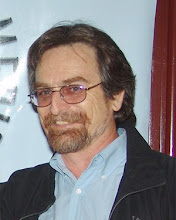
I was very surprised to recently find
that Andrei Voznesensky
has a new career.
While using that wonderful poetic device ‘Google’
I saw the great Russian poet’s name
listed on Linked-In.com.
Once there, I discovered that
Mr Voznesensky is a
“Senior Principal Scientist at Pfizer
in the Hartford, Connecticut Area.”
And the author of Modern Nature and
ru and
Dead Still
and my favorite
– Bicycles –
has 50 connections!
And some of my connections know some of his connections…
I am so glad to know that Voznesensky is interested in:
* career opportunities
* consulting offers
* job inquiries
* reference requests
and
* getting back in touch
There is so much we could discuss –
the surreal image,
symbolism and
use of synecdoche
in his previous position as
a Principal Research Scientist at Bayer Pharmaceutical.
Does Boris Pasternak know
that his former protégé is now
a member of the
Biotech & Pharma Professionals Network?
Are the poetic influences of Mayakovsky and Neruda
useful in his present endeavors?
If I sound disappointed, well,
that may be true.
I mean, the guy’s got a minor planet
named after him:
‘3723 Voznesenskij.’
And shouldn’t he – after all – be concentrating
on poetry?
So I sent him a message, because
there’s that big blue headline:
“Send a message to Andrei Voznesensky”
and right under it, two golden buttons –
“Contact Directly”
and
“Get Introduced”
(“7 of your trusted connections can introduce you to someone who knows this person”).
And I wrote,
“So Andrei, how’s it hanging?
Hey, what’s with the job in big pharma?
You’re a genius, man, with medals and shit,
And you ought to be writing those pithy poems
that made you famous.
Keep it real, man,
And don’t forget your roots. Hakim”
And a couple days later I got this back:
“Sorry to disappoint you,
but the poet you write about
and I
are not even related.
I hope he is not bothered by people
looking for a prescription.
Dos vedanya, AV”
David Hakim is an assistant director, producer, and publicity expert who developed campaigns for every major Hollywood studio and handled publicity for the Motion Picture Academy. Find him in the Reel Directory online: www.reeldirectory.com.
All material copyright 2008 David Hakim and may not be duplicated - ALL RIGHTS RESERVED.
domingo, 21 de junio de 2009

sábado, 20 de junio de 2009
Uncle’s Song
(with apologies to Gilbert & Sullivan)
“I am the very model of a new avuncularity –
I've made myself the uncle of a group with some disparity.
Among them you’ll find actors and some students of the legal type –
Perhaps one day there will be one whose family bears a regal stripe!”
“Perhaps one day there will be one whose family bears a regal stripe!”
“These lads and lasses all have heads that bulge with ideas quite profound
And planet-saving notions about which they’re willing to expound.
They’re music makers, peachtree shakers and with full celerity
They even do some root canals for profit or for charity!”
“They even do some root canals for profit or for charity!”
“I worry that the youth today have not got full advantages
Though educated fully, they must work for what are scant wages.
But most are led by notions that they battle vile barbarity
And so they practice every day to sharpen their dexterity!”
“And so they practice every day to sharpen their dexterity!”
“I find them jobs and search for posts to give them skills and expertise
So they won’t have to find success by laboring in small degrees.
My nephews and my nieces face the world with staunch temerity
And so their chances are quite good to wallow in prosperity!”
“And so their chances are quite good to wallow in prosperity!”
“I wish for nepotism rare that has been turned all inside-out.
That is, that they will hire me at wages to write home about.
So far no job’s popped up, which is a great peculiarity –
But I have hopes to be employed for all my popularity!”
“But he has hopes to be employed for all his popularity!”
And on this point I must insist on having crystal clarity –
For it’s been said the workplace is no place for rude hilarity –
My sisters’ kids I do help out with deep and true sincerity:
I am the very model of a new avuncularity.”
“He is the very model of a new avuncularity.”
David Hakim is an assistant director, producer, and publicity expert who developed campaigns for every major Hollywood studio and handled publicity for the Motion Picture Academy. Find him in the Reel Directory online: www.reeldirectory.com.
All material copyright 2009 David Hakim and may not be duplicated - ALL RIGHTS RESERVED.
“I am the very model of a new avuncularity –
I've made myself the uncle of a group with some disparity.
Among them you’ll find actors and some students of the legal type –
Perhaps one day there will be one whose family bears a regal stripe!”
“Perhaps one day there will be one whose family bears a regal stripe!”
“These lads and lasses all have heads that bulge with ideas quite profound
And planet-saving notions about which they’re willing to expound.
They’re music makers, peachtree shakers and with full celerity
They even do some root canals for profit or for charity!”
“They even do some root canals for profit or for charity!”
“I worry that the youth today have not got full advantages
Though educated fully, they must work for what are scant wages.
But most are led by notions that they battle vile barbarity
And so they practice every day to sharpen their dexterity!”
“And so they practice every day to sharpen their dexterity!”
“I find them jobs and search for posts to give them skills and expertise
So they won’t have to find success by laboring in small degrees.
My nephews and my nieces face the world with staunch temerity
And so their chances are quite good to wallow in prosperity!”
“And so their chances are quite good to wallow in prosperity!”
“I wish for nepotism rare that has been turned all inside-out.
That is, that they will hire me at wages to write home about.
So far no job’s popped up, which is a great peculiarity –
But I have hopes to be employed for all my popularity!”
“But he has hopes to be employed for all his popularity!”
And on this point I must insist on having crystal clarity –
For it’s been said the workplace is no place for rude hilarity –
My sisters’ kids I do help out with deep and true sincerity:
I am the very model of a new avuncularity.”
“He is the very model of a new avuncularity.”
David Hakim is an assistant director, producer, and publicity expert who developed campaigns for every major Hollywood studio and handled publicity for the Motion Picture Academy. Find him in the Reel Directory online: www.reeldirectory.com.
All material copyright 2009 David Hakim and may not be duplicated - ALL RIGHTS RESERVED.
lunes, 15 de junio de 2009
The Technique of Making Movies: Problem Solving at 85 MPH – for 18 Hours Straight
YOUR CALL TIME: 515 am
430 am Leave home for work – it’s chilly and quiet.
440 am Hit Bay Bridge – there is no traffic and the music on the radio is pretty good.
450 am Arrive on set, find parking space that’s close but not too close.
451 am Discover two cranes parked in the middle of your set at Moscone Center.
[Location Manager from previous commercial left them ‘as a gift.’]
452 am Teamsters have no flashlight, can’t find keys to cranes.
453 am While calling other Location Manager at home, take 3-battery maglite out of car,
give to Teamster to find keys.
454 am Trucks stacking up waiting to park for offloading.
455 am Craft service/ breakfast truck arrives, wants to set out coffee, has no water.
456 am 1st crane starts to be moved out of way – at 1 mph. [88fpm / 1.5 fps]
457 am Call from PA – he is lost.
458 am Motorhome arrives.
459 am Makeup / hair people arrive, want coffee.
500 am 2nd crane starts to be moved – at 1 mph.
501 am Boss arrives, wants to know why things are going to hell in a handbasket, wants
coffee now. [her call is 530 am]
502 am Tongue stops hurting from biting it.
503 am Boss asks for a walkie-talkie (camera truck has not arrived with walkie-talkies).
504 am Give her your walkie, though it’s the only one on set so she has no one to talk to.
505 am Camera truck parked & opened.
506 am Walkie-talkies taken out, some batteries discovered to be dead.
507 am Dead batteries taken to motorhome to charge.
508 am Makeup Person screaming because chairs have not arrived.
509 am Congratulate self on not throttling Makeup Person.
510 am Motorhome generator discovered to be malfunctioning. PA arrives.
511 am Discover that your picture-car dashcards are at home on desk; cars due at 6 am.
512 am Pull out generic dashcard master from ‘Felix magic bag.’
513 am Hand generic dashcard to PA to copy on motorhome photocopier.
514 am Motorhome generator still not working: no copies available yet.
515 am Cops arrive, PA asks them to fill out I-9 forms; you apologise profusely to cops.
516 am Video Assist wants to know where camera will be, so he can set up away from it.
517 am Hand walkies to Cops, write down their names and check broadcast channels.
518 am Ask boss where camera will be.
519 am Boss asks, ‘Do you see our Director? Well, then how the hell should I know?’
520 am Boss informs you that second location has changed – you must inform all
Department Heads.
521 am Location Manager yelps about change of second location, runs from scene.
522 am APC hands you 4-pound envelope with hundreds of extra vouchers and actor
contracts, along with start paperwork for entire crew, call sheets, shot lists and
storyboards.
523 am Hand 4-pound envelope to PA, thinking you will sort it later; pull out call sheets,
shot lists and storyboards.
524 am Order walking burrito, which you will forget all about and it will be thrown away
and another one will have to be ordered, which you will start to eat but will drop when Boss calls you on the walkie.
525 am First Actress arrives, wants full breakfast.
526 am Hand breakfast order to PA while introducing first Actress to Makeup Person you
now hate.
527 am Start handing out call sheets, shot lists & storyboards – 1st one to Makeup Person
you hate, 2nd one to Hairdresser you think is kinda cute, 3rd one to first Actress.
528 am Hand out call sheets, shot lists and storyboards to crew grouped around breakfast table.
529 am Homeless person hassling people at breakfast table; someone wants to call a cop.
530 am Gently walk homeless person to corner, where you give him a banana, a bagel and a carton of juice.
531 am Second Actress is one minute late – has not arrived; take a deep breath.
532 am Call Transportation Coordinator on walkie to ask if second Actress was picked up.
533 am Transpo Coordinator asks you not to do his job for him.
534 am Hero Cars arrive; no one knows where to park the trailer.
535 am Call Transportation Coordinator on walkie to ask where to put Hero Car Trailer.
536 am Transpo Coordinator tolerantly asks your 20, says to wait for him there.
538 am Transpo Coordinator ignores you while telling Hero Car Driver where to put trailer.
539 am Ask Caterer for breakfast burrito, find out it was tossed when you didn’t come back.
540 am Grab box of cereal, start to eat it dry.
541 am Get walkie call from Boss: “How are my Actresses?”
542 am Start to choke on inhaled dry cereal while answering walkie call.
543 am Call Transpo Coordinator, ask about second Actress.
544 am Check on first Actress.
545 am Second Actress arrives, give her call sheet, shot list and storyboard.
546 am Introduce second Actress to Makeup Person you hate and Kinda-Cute Hairdresser.
547 am Write down second Actress’ breakfast order.
548 am Give second Actress’ breakfast order to Caterer while getting own breakfast burrito, bite into it – it’s hot!
549 am Simply enjoy the hot food for about 30 seconds because – well, you’re human.
550 am Call Transpo Coordinator on walkie to check on Director pickup at hotel.
551 am Transpo Coordinator tells you not to do his job for him.
552 am Director calls from hotel: van has not picked him up.
553 am Find Transpo Coordinator, ask to see his pickup list.
554 am Pick up crumpled pickup list from ground, attempt to smooth it on car fender.
555 am Damp car fender has made pickup list soggy.
556 am Boss calls for Car Prep Guys NOW – drop breakfast burrito while running to find them.
557 am Boss asks for Director; inform her that Director is still at hotel.
558 am Take quiet pleasure in Boss reaming Transpo Coordinator.
559 am Find your 3-battery maglite on the ground.
600 am Unasked, Teamster informs you that he left your 3-battery maglite on bus bench.
And that’s only the first hour or so. It goes on like this all day long, as people are choking from bus fumes, actresses get lost, people fight with each other, cars are moved and removed and the cops aren’t getting the right directions on the walkie, and the store owners are complaining about your crew blocking their entrances so you have to pony up $300 in petty cash to keep them happy. Not all the extras arrive on time because one is lost in Oakland and two are stuck at the parking lot and the Transpo Coordinator doesn’t have van to send to pick them up.
The Hero Actor is cranky about his girlfriend jilting him and wants to jump the Kinda-cute Hairdresser and asks you for the address of a good sportsbar for later. The Director asks you to make sure that his reservations for Chez Panisse are at the right time and your PA loses the 4-pound envelope with all the extra vouchers in it but it’s found later by the Set Medic who thinks you look just like a guy who was running around with his wife behind his back – ‘that wasn’t you, was it?’ – and you have to duck into your car three times during the day to change your shirt because you are sweating so much from all the exertion.
Lunch is served at 11:30 am, and you stand at the table to make sure that only your crew and actors eat – there are loafers and con artists circling for a free bite. You gulp down your lunch standing up while watching the equipment, then have a conference with your Boss who thinks you should have been moving faster all morning, and then it’s off to make the rest of the day go.
You first get your Actresses to Makeup and Hair (she is cute!) and then have Wardrobe check them for gravy-stains. Then in front of the camera with them, and you go to set background, which group comprises a lot of wannabee actors who think they deserve a shot at stardom. Amongst them are a few really good souls, but most are just ordinary people, with all the foibles and failings of the normal population - while a few have no business in this business.
At 430 pm, you stand in the center of California Street directing the traffic away from your oblivious crew, who would be squashed by angry motorists if ADs and cops did not work overtime to keep them alive. Swinging your arms rhythmically to keep the cars flowing, you suddenly realise that you are in the direst pain from your knees all the way to the pavement. You think about it for exactly 3.2 seconds, when you get a walkie call to head over to the corner to get the bum out of the shot. The bum says he his hungry and you wonder what you ate for lunch – you know that you ate, but you can’t remember for the life of you what you ate.
And so it goes, til 11:30 that night, when you head for your car and the long drive home – it’s quiet, there’s no traffic on the Bridge and the jazz on the radio is cool.
430 am Leave home for work – it’s chilly and quiet.
440 am Hit Bay Bridge – there is no traffic and the music on the radio is pretty good.
450 am Arrive on set, find parking space that’s close but not too close.
451 am Discover two cranes parked in the middle of your set at Moscone Center.
[Location Manager from previous commercial left them ‘as a gift.’]
452 am Teamsters have no flashlight, can’t find keys to cranes.
453 am While calling other Location Manager at home, take 3-battery maglite out of car,
give to Teamster to find keys.
454 am Trucks stacking up waiting to park for offloading.
455 am Craft service/ breakfast truck arrives, wants to set out coffee, has no water.
456 am 1st crane starts to be moved out of way – at 1 mph. [88fpm / 1.5 fps]
457 am Call from PA – he is lost.
458 am Motorhome arrives.
459 am Makeup / hair people arrive, want coffee.
500 am 2nd crane starts to be moved – at 1 mph.
501 am Boss arrives, wants to know why things are going to hell in a handbasket, wants
coffee now. [her call is 530 am]
502 am Tongue stops hurting from biting it.
503 am Boss asks for a walkie-talkie (camera truck has not arrived with walkie-talkies).
504 am Give her your walkie, though it’s the only one on set so she has no one to talk to.
505 am Camera truck parked & opened.
506 am Walkie-talkies taken out, some batteries discovered to be dead.
507 am Dead batteries taken to motorhome to charge.
508 am Makeup Person screaming because chairs have not arrived.
509 am Congratulate self on not throttling Makeup Person.
510 am Motorhome generator discovered to be malfunctioning. PA arrives.
511 am Discover that your picture-car dashcards are at home on desk; cars due at 6 am.
512 am Pull out generic dashcard master from ‘Felix magic bag.’
513 am Hand generic dashcard to PA to copy on motorhome photocopier.
514 am Motorhome generator still not working: no copies available yet.
515 am Cops arrive, PA asks them to fill out I-9 forms; you apologise profusely to cops.
516 am Video Assist wants to know where camera will be, so he can set up away from it.
517 am Hand walkies to Cops, write down their names and check broadcast channels.
518 am Ask boss where camera will be.
519 am Boss asks, ‘Do you see our Director? Well, then how the hell should I know?’
520 am Boss informs you that second location has changed – you must inform all
Department Heads.
521 am Location Manager yelps about change of second location, runs from scene.
522 am APC hands you 4-pound envelope with hundreds of extra vouchers and actor
contracts, along with start paperwork for entire crew, call sheets, shot lists and
storyboards.
523 am Hand 4-pound envelope to PA, thinking you will sort it later; pull out call sheets,
shot lists and storyboards.
524 am Order walking burrito, which you will forget all about and it will be thrown away
and another one will have to be ordered, which you will start to eat but will drop when Boss calls you on the walkie.
525 am First Actress arrives, wants full breakfast.
526 am Hand breakfast order to PA while introducing first Actress to Makeup Person you
now hate.
527 am Start handing out call sheets, shot lists & storyboards – 1st one to Makeup Person
you hate, 2nd one to Hairdresser you think is kinda cute, 3rd one to first Actress.
528 am Hand out call sheets, shot lists and storyboards to crew grouped around breakfast table.
529 am Homeless person hassling people at breakfast table; someone wants to call a cop.
530 am Gently walk homeless person to corner, where you give him a banana, a bagel and a carton of juice.
531 am Second Actress is one minute late – has not arrived; take a deep breath.
532 am Call Transportation Coordinator on walkie to ask if second Actress was picked up.
533 am Transpo Coordinator asks you not to do his job for him.
534 am Hero Cars arrive; no one knows where to park the trailer.
535 am Call Transportation Coordinator on walkie to ask where to put Hero Car Trailer.
536 am Transpo Coordinator tolerantly asks your 20, says to wait for him there.
538 am Transpo Coordinator ignores you while telling Hero Car Driver where to put trailer.
539 am Ask Caterer for breakfast burrito, find out it was tossed when you didn’t come back.
540 am Grab box of cereal, start to eat it dry.
541 am Get walkie call from Boss: “How are my Actresses?”
542 am Start to choke on inhaled dry cereal while answering walkie call.
543 am Call Transpo Coordinator, ask about second Actress.
544 am Check on first Actress.
545 am Second Actress arrives, give her call sheet, shot list and storyboard.
546 am Introduce second Actress to Makeup Person you hate and Kinda-Cute Hairdresser.
547 am Write down second Actress’ breakfast order.
548 am Give second Actress’ breakfast order to Caterer while getting own breakfast burrito, bite into it – it’s hot!
549 am Simply enjoy the hot food for about 30 seconds because – well, you’re human.
550 am Call Transpo Coordinator on walkie to check on Director pickup at hotel.
551 am Transpo Coordinator tells you not to do his job for him.
552 am Director calls from hotel: van has not picked him up.
553 am Find Transpo Coordinator, ask to see his pickup list.
554 am Pick up crumpled pickup list from ground, attempt to smooth it on car fender.
555 am Damp car fender has made pickup list soggy.
556 am Boss calls for Car Prep Guys NOW – drop breakfast burrito while running to find them.
557 am Boss asks for Director; inform her that Director is still at hotel.
558 am Take quiet pleasure in Boss reaming Transpo Coordinator.
559 am Find your 3-battery maglite on the ground.
600 am Unasked, Teamster informs you that he left your 3-battery maglite on bus bench.
And that’s only the first hour or so. It goes on like this all day long, as people are choking from bus fumes, actresses get lost, people fight with each other, cars are moved and removed and the cops aren’t getting the right directions on the walkie, and the store owners are complaining about your crew blocking their entrances so you have to pony up $300 in petty cash to keep them happy. Not all the extras arrive on time because one is lost in Oakland and two are stuck at the parking lot and the Transpo Coordinator doesn’t have van to send to pick them up.
The Hero Actor is cranky about his girlfriend jilting him and wants to jump the Kinda-cute Hairdresser and asks you for the address of a good sportsbar for later. The Director asks you to make sure that his reservations for Chez Panisse are at the right time and your PA loses the 4-pound envelope with all the extra vouchers in it but it’s found later by the Set Medic who thinks you look just like a guy who was running around with his wife behind his back – ‘that wasn’t you, was it?’ – and you have to duck into your car three times during the day to change your shirt because you are sweating so much from all the exertion.
Lunch is served at 11:30 am, and you stand at the table to make sure that only your crew and actors eat – there are loafers and con artists circling for a free bite. You gulp down your lunch standing up while watching the equipment, then have a conference with your Boss who thinks you should have been moving faster all morning, and then it’s off to make the rest of the day go.
You first get your Actresses to Makeup and Hair (she is cute!) and then have Wardrobe check them for gravy-stains. Then in front of the camera with them, and you go to set background, which group comprises a lot of wannabee actors who think they deserve a shot at stardom. Amongst them are a few really good souls, but most are just ordinary people, with all the foibles and failings of the normal population - while a few have no business in this business.
At 430 pm, you stand in the center of California Street directing the traffic away from your oblivious crew, who would be squashed by angry motorists if ADs and cops did not work overtime to keep them alive. Swinging your arms rhythmically to keep the cars flowing, you suddenly realise that you are in the direst pain from your knees all the way to the pavement. You think about it for exactly 3.2 seconds, when you get a walkie call to head over to the corner to get the bum out of the shot. The bum says he his hungry and you wonder what you ate for lunch – you know that you ate, but you can’t remember for the life of you what you ate.
And so it goes, til 11:30 that night, when you head for your car and the long drive home – it’s quiet, there’s no traffic on the Bridge and the jazz on the radio is cool.
martes, 9 de junio de 2009
Yet More Tears for The Onion
David Roland is at it again. We're hoping that someone from The Onion is occasionally scanning the internet for a mention of the paper... [see previous articles by Roland on this site]
Tiananmen/Khomeini Link Finally Out – 20 Years Too Late
Tiananmen Square, Beijing, June 4, 2009 - On the 20th Anniversary of Tiananmen Square Massacre, the “May 35th Incident” (as it is known in China, to avoid government crackdown on reports about the “Six-Four Occurrence”) has a special significance. This year, also the 20th anniversary of the death of Iran’s Ayatollah Sayyid Ruhollah Musavi Khomeini, we have the unique opportunity of perspective that allows us to look at a tragic accident transmuted by the press into an aggressive act by a weak government struggling with a counter-revolutionary student uprising.
Nothing could be further from the truth.
In fact, the tanks in the Square that day were there to honor the passing of Iran’s Ayatollah Khomeini on June 3, and the entire column of field ordnance was intended to make the traditional 21-gun salute to the fallen leader of Iran’s Revolution. In a lamentable case of human error gone horribly wrong, the turrets of the guns were not raised sufficiently, and unfortunately a number of students died.
One ironic point of the day was that Khomeini’s revolution was based in and fomented by the student population of Tehran - and here the Chinese were, killing the flower of their own intellectual youth. The Chinese government made the Tiananmen situation worse by claiming that the students had been jaywalking, and that particular crime was a serious threat to the integrity of the revolution. Subsequent attempts by various government departments to cover up the truth of that day have made the government look much worse.
One student (now known as ‘Tank Man’), standing with calendar in hand, was seen to stop the column of Chinese Type 59 tanks in the middle of Tiananmen Square, in an attempt to get them to raise their turret guns and avoid the carnage that was to come. Apparently, his dialect was not well understood by the tank commander, who parlayed with him before attempting a paso-doble in the middle of the square with the now-anonymous lad. Also called ‘the Unknown Rebel,’ the unidentified student is thought to have been executed for some weeks later for obstructing traffic. Other sources claim that the student is now a cell-phone magnate in Taiwan.
David Roland is a humorist who likes to make people wince as they are laughing - a rare trick. He is Hakim's close friend, and people who see them together should think carefully about the negative ramifications of calling them 'the two Daves.'
David Hakim is an assistant director, producer, and publicity expert who developed campaigns for every major Hollywood studio and handled publicity for the Motion Picture Academy. Find him in the Reel Directory online: www.reeldirectory.com.
All material copyright 2008 David Roland and may not be duplicated - ALL RIGHTS RESERVED.
Tiananmen/Khomeini Link Finally Out – 20 Years Too Late
Tiananmen Square, Beijing, June 4, 2009 - On the 20th Anniversary of Tiananmen Square Massacre, the “May 35th Incident” (as it is known in China, to avoid government crackdown on reports about the “Six-Four Occurrence”) has a special significance. This year, also the 20th anniversary of the death of Iran’s Ayatollah Sayyid Ruhollah Musavi Khomeini, we have the unique opportunity of perspective that allows us to look at a tragic accident transmuted by the press into an aggressive act by a weak government struggling with a counter-revolutionary student uprising.
Nothing could be further from the truth.
In fact, the tanks in the Square that day were there to honor the passing of Iran’s Ayatollah Khomeini on June 3, and the entire column of field ordnance was intended to make the traditional 21-gun salute to the fallen leader of Iran’s Revolution. In a lamentable case of human error gone horribly wrong, the turrets of the guns were not raised sufficiently, and unfortunately a number of students died.
One ironic point of the day was that Khomeini’s revolution was based in and fomented by the student population of Tehran - and here the Chinese were, killing the flower of their own intellectual youth. The Chinese government made the Tiananmen situation worse by claiming that the students had been jaywalking, and that particular crime was a serious threat to the integrity of the revolution. Subsequent attempts by various government departments to cover up the truth of that day have made the government look much worse.
One student (now known as ‘Tank Man’), standing with calendar in hand, was seen to stop the column of Chinese Type 59 tanks in the middle of Tiananmen Square, in an attempt to get them to raise their turret guns and avoid the carnage that was to come. Apparently, his dialect was not well understood by the tank commander, who parlayed with him before attempting a paso-doble in the middle of the square with the now-anonymous lad. Also called ‘the Unknown Rebel,’ the unidentified student is thought to have been executed for some weeks later for obstructing traffic. Other sources claim that the student is now a cell-phone magnate in Taiwan.
David Roland is a humorist who likes to make people wince as they are laughing - a rare trick. He is Hakim's close friend, and people who see them together should think carefully about the negative ramifications of calling them 'the two Daves.'
David Hakim is an assistant director, producer, and publicity expert who developed campaigns for every major Hollywood studio and handled publicity for the Motion Picture Academy. Find him in the Reel Directory online: www.reeldirectory.com.
All material copyright 2008 David Roland and may not be duplicated - ALL RIGHTS RESERVED.
sábado, 30 de mayo de 2009
THE POET
The poet isn’t defined by what he writes. Some poets never write a single line. Some people write hundreds of verses and will never really be poets.
The poet isn’t defined by how he or she lives. Not every drunk is a poet, and most poets aren’t drunks. Anyone can adopt a Bohemian lifestyle – it won’t make one a poet any more than it makes one a Bohemian.
What then defines the poet? Perhaps this: how he perceives, feels and expresses all the phenomena and sensations coming around and through him. And what common thread runs through the diverse lives of poets, through their incongruous personalities?
~ Lorca stepping between the guns on the morning of his assassination.…
~ Hart Crane diving into a ship’s propeller….
~ Rimbaud, racing for life in Africa after shooting his lover, finally coming home to die of syphilis….
~ Camille Claudel, driven mad by love, destroying her own work….
~ Siefert handing out his poems mimeographed when the government bans his work….
~ Vallejo starving as he writes about the thin blade of loneliness….
~ Van Gogh’s ear rejected by a whore….
~ Pascal’s slashed wrists floating in the ruby water of his bathtub….
~ Artaud running with the mad….
~ Sylvia Plath’s head in the cold hissing oven….
~ Chatterton eating rat poison….
~ Hemingway blowing his brains into the orange juice….
~ Berryman flying off a bridge….
~ Burroughs accidentally shooting his wife in a Mexican bar….
~ Pound dragged through the streets in a cage….
~ Dostoevsky up against the bullet-scarred wall….
The common thread is a vague indefinable something that animates the poet and sends him or her swimming deep and flying high, til the very words ‘exalted’ and ‘degraded’ no longer have any meaning. It is a spark, a charge which drives him in the futile attempt to encompass all depth and height with his own being, to learn the questions, discover the answers, find the connections and essence.
The poet tells truth, using subtle arts: exaggeration, the misnaming of things, smoky oblique reflections, and those illogical but revealing comparisons. And all these acts would be considered unethical and dishonest if used in normal discourse. But for poetry they are the meat and sinew, the crushing muscle, the flashing nerve.
And why does the poet tell that story, use those clever arts? Because he or she is a poet, and that is what poets are driven to do. Because something burns in the most private heart of the poet, something which forces him – often against his will and contradicting all reason – to stretch the skin of his soul… so that tamer creatures might finally know how large they can grow.
All material copyright 1992 - May not be duplicated - ALL RIGHTS RESERVED.
What is Coming ~ The ‘Brave New World’ of the 21st Century
So we are going into hard times. All signs point to that eventuality. Every news program warns of the impending crash of all we have come to depend on. We are going to face the toughest times imaginable, tougher than our parents and their parents suffered during the Great Depression. All the experts say so.
All right, so be it. Americans are tough and resilient, and they always have been. People who pick up stakes and travel halfway around the world in search of better conditions are a special breed, and for several centuries America has been the landing-place of that kind of person from every corner of the earth. We are all pioneers, or the descendants of pioneers; we are ‘can do’ people, and we know how to ‘make do’ – and that’s just what we will do.
‘Hard times’ is not an absolute; it is a construct of many smaller situations that will be defined differently by various people. And everyone has a different notion of what ‘hard times’ really means. But the interesting thing is that, like generals fighting the last war, those notions comprise details and situations of times past – which means that, operating in changing circumstances, most people will be trying to use old tools to do new jobs. But if we can realistically picture what is coming, we may be able to construct new intellectual tools to deal with the massive changes.
Infrastructure Changes
The most visible change seen during these hard times will be the decay of basic civic infrastructure. Cities and towns – once dependent on state or federal funding for basic services – will collapse, as they lose the struggle to keep vital services afloat. We will see a decline in those services: police and fire departments, hospitals, schools, garbage removal, utilities, and roadways. Libraries will be the first to go, though in the ‘enlightened’ areas (generally the more upscale towns) the libraries will quickly become volunteer-run, merely to keep their doors open as many hours per week as possible.
However, layoffs in police forces will create vacuums into which criminals will flow, and the process of re-stabilisation will be difficult. Fire departments will move – by fits and starts – to volunteer systems, managed by a few union employees at the top. Many hospitals will close, meaning that people will have to travel farther for medical treatment, something much harder to do without fuel-efficient cars. In some areas, this will mean travel of up to 100 miles for emergency treatment, and MediVac services will have all but disappeared in most areas.
Basic prices for utilities will go up, and people will have to learn very quickly how to get along while using less. Water will be come much more expensive, and coastal communities may well try to pump in seawater for most household uses. As we have seen in the past, lawns will disappear in most neighborhoods, replaced perhaps by cement painted green. ‘Rolling brownouts’ can be expected as a matter of course – no electricity for several hours during the day. (The irony here is that fighting a useless war in Iraq will turn America into a version of that country just after the invasion.)
Other services will suffer, as parks become deserts of unwatered grass and roadways become riddled with potholes. Public buildings will go uncleaned and unmaintained, and people will become accustomed to seeing all around themselves the unlovely process of decay.
Airports – very costly to maintain – will close in many areas, as more airlines trim their schedules and shrink fleets. Air travel will recede to the province of the rich, and even the ‘lucky’ rich will have to accept the inconvenience of only a single flight per day to many of their destinations.
Trains won’t be able to pick up the slack, since our legislators have allowed the once-flourishing rail system to fall into extreme disrepair. It will take years – and great expenditure – to build that vital infrastructure back up, and, as people learn more about the situation, the careers of many politicians will suffer. The crowd is likely to be very angry when it learns that the cheapest mode of transporting goods – trains – will not be ready to handle the increased needs in shipping when trucks become much less viable due to lack of fuel. And unfortunately, passenger train travel (which is now almost as expensive as air flights) will soon cost more than flying currently does – though the comforts of this kind of travel will disappear completely when upsurges in usage take their toll on facilities.
Even bus travel will become as expensive as air fares are currently, and the ride will be interminable, unpleasant, and occasionally dangerous. The current state of bus terminals is inadequate to handle the sheer number of bus travelers who will need the service when airports close and the trains fill up.
The toughest situation – the most profound change that will affect the future of America for much longer than any other – will be the lack of funding for schools. We can expect schools at all levels to cut back – far fewer teachers for fewer hours, and at a time when more students are entering the system. The resulting loss of basic education will produce a much less intelligent populace – a populace that will be easily manipulated by politicians, opinion-makers, and advertisers. We may see several generational waves of supposedly educated people who will actually rely much more on opinion and superstition than we have ever witnessed previously.
This lack of knowledge and reasoning in the American people will drive surges in jingoism and bigotry, and the result will not be pretty. America will become much more isolated on the world stage – as most countries will be – but America will be hit very hard by trade imbalances and foreign ownership of property within its borders, and America’s woeful educational state will create poor reactions to the global situation (about which more later).
Social Changes
The largest change will be a widening of the distance between haves and have-nots. As the middle class disappears, the upper class will shrink while the lower class grows. Previously, a large lower class was not the problem that it will become in the 21st Century – poor neighborhoods were traditionally safer than they have become toward the end of the last century. The widespread influx of drugs into poor neighborhoods in the last fifty years has turned many poor neighborhoods into dangerous and crime-ridden battlegrounds. And, because the population has been raised on the idea of entitlement, people will expect to continue a certain unrealistic standard of living. The combination of these two factors will mean more crime in the poor neighborhoods than was present even during the Great Depression, which did not have nearly the amount of interpersonal crime that is coming our way.
Joblessness will become more common, and more of a burden on an already-burdened economy. The election’s good news was offset by the news that unemployment in the Denver area of Colorado reached 25%, while the US Post Office announced layoffs of up to 40,000 jobs nationwide – the first layoff of postal employees in history. In the same month, Mexicans and Central Americans began heading back to their home countries, since work for them in the US was already drying up. While the tiny silver lining will reveal some of those jobs for Americans, the jobs will be very few and they won’t pay enough to keep the average American above the poverty level. (The only reason that most immigrants could afford to take those jobs was that many of them lived in commune-like situations, often with a dozen people in one apartment, sleeping in the beds in shifts. It is anyone’s guess how long – if ever – it would be before Americans would accept such sacrifices.)
The ‘super rich’ will still be protected by the remainder of their money, since a billionaire who loses 90% of his fortune still has $100 million, becoming part of the ‘very rich.’ The very rich will become the new merely rich – a person worth $100 million losing 90% of his fortune would still have $10,000,000. And in the ‘new economy,’ these folks will be the ones buying up the foreclosed properties of the disenfranchised middle class, thus laying the groundwork for their children to become wealthy when property values stabilise in one or two generations.
Many of these new merely rich people will flee the cities, moving onto large tracts of land in rural areas and setting themselves up (mostly) ‘off the grid.’ They will become the benefactors of numerous previously-failing small towns, and will start a new feudal system, keeping a small area thriving because that area supports them and their lifestyle.
The merely rich will become the new upper-middle class – a millionaire losing 90% of his fortune would still have $100,000. These people too might sell out and head for the country, becoming the new merchant class or service class, in an economy that will have no (or very few) imports.
The upper-middle class of the today (which is small compared to the current middle class) will painfully become the new middle class, and the working force of America that once was the middle class will descend into poverty. This process will be relatively swift, though it will seem longer because it will be trumpeted in all media – creating a kind of horror-show that will further debilitate those still hanging on to their jobs or homes.
The merely poor will become the homeless poor, as people who have lost their jobs are forced out of apartments and houses they can no longer afford. That homelessness will lead, in small part, to a rise in enlistments in the military and in religious missions, and to people ‘going on the road’ and living in their vehicles. There will be vast camps of these unfortunates outside every large town and city, just as there were in the Great Depression. This transformation will not be covered quite as much on the news, but will be the ‘open secret’ of every city and large town, as the camps become havens for criminals.
In other areas of life, garage sales will become much more prevalent to bring in money to stretch the budget, and these sales will move away from ‘weekend only’ events to ‘every day’ events. We will also see the return of itinerant salesmen – only this time, they will be selling off things that they or others once owned – going from door to door or from business to business with a suitcase or backpack filled with what they can carry in hopes of raising enough money to pay the landlord or the grocer.
There will certainly be a rise in alcoholism and drug abuse, with all the attendant problems of those diseases. Alcoholism will speed the process of unemployment and homelessness for many people, taking them out of the normal strata of society. Further, treatment facilities will have closed or cut back to the point where the ‘normal infrastructure’ for handling these problems will not be able to handle one-tenth of the cases needing treatment.
We can expect a rise in suicides, in paternal abandonment of families, and in sickness due to a number of factors related to less spending power – from heart attacks and stroke brought on by worry and panic, to an increase in pneumonia as the result of lack of healthy diet and proper care. And as health-care costs skyrocket and hospital staffs and services are reduced, we’ll see a rise in physical traumas, both large and small, when the Internet interacts with natural nitwittery to persuade people to try solving their own medical problems at home and without proper equipment or expertise.
As food becomes more expensive, more people turn small patches of land to subsistence farming, which will have both positive and negative effects. While becoming more self-sufficient is a good thing, home-farming may also lead to health issues caused by chemical contamination of land (especially in urban areas, where toxins have leaked into the ground from gas stations, auto repair shops, and factories). Other people will simply eat less, or eat ‘cheaper’ – switching to cheap processed foods – resulting in more widespread health declines.
Rising food prices could also affect the growing of feed crops, since fewer people will be able to afford beef. This would reduce the feeding of corn cattle – 17 pounds of corn to get one pound of beef – and the land used to grow the corn could be turned to other crops, crops needed to feed the hungry here at home. It is an irony that we import produce from other countries, while we could be growing enough food to actually feed some of those countries.
There would still be the question of the vast amount of fertile farmland adjacent to cities that was turned into suburbs in the past century – probably America’s most profound mistake of the 1900s. This insane idea of ‘progress’ left urban areas to blight and decay, while destroying valuable farmland and placing an even greater burden on farmlands in which minerals were diminishing – causing even greater amounts of additives to be used. No one knows at this point how those lands can be reclaimed for more sensible use – nor whether the land can even be reclaimed safely and how expensive such an operation might be. But many will decry the short-sightedness of developers and urban planners in the years to come.
And many still point out that Americans have been using up the earth’s resources at an alarming rate – author Fred Pearce (Confessions of an Eco-Sinner) reports that, to maintain the lifestyle of an average American (considering all the electronic and labor-saving devices, etc), a citizen in the Roman Empire would have required about 6,000 slaves. In his excellent documentary, Consume This Movie, Gene Brockoff quotes environmentalist and simplicity expert Dwayne Elgin: "If the whole world consumed in the way that Americans do, it would take five planets to sustain our lifestyle."
Perhaps the current situation will convince us to put our priorities elsewhere, to consume less and waste less, to allow the planet to heal a bit, while we try to align science and industry to actually save the resources we have been squandering so wildly in our rush to satisfy the dogs of rampant capitalism and avoid recession.
Dangerous Changes
As things get tougher for the folks at the bottom of the economic scale, the coming hard times will bring a rise in crime – violent crime, robbery, and property crimes. One of the axioms of economics is that crime increases during two periods of a society’s arc – first, when the economy is just getting itself into gear and the middle class begins to rise, and second, when the inevitable economic declines come.
And as people are put out of work, even those who have always been law-abiding will turn to some kind of crime – though usually this will be non-violent and more ‘white collar’ (fraud, passing bad checks, shoplifting). Homelessness – the lack of an address itself – will lead to a certain amount of petty crime.
The new ‘cottage economy’ will lead to a rise in smaller crimes, as local yard-sales and itinerant salespeople are struck by strong-arm robbers, shoplifters, or ‘snatch-&-grab thieves.’
We can expect a huge increase in committed felonies, leading to a surge felony convictions that will put pressure on our clogged court systems and our already-overcrowded prisons. As ‘basic services’ decline, we will see other related problems. Car hijackings will become common, until the time that gas prices will be driven up so much that cars are no longer used as much. Burglaries will be common, as will the crimes of shoplifting, purse-snatching, and mugging.
International Changes
Internationally, we can expect the news to be dire. Climate change and economic crises will throw many developing countries back into physical states that existed a century or more ago. Americans will be empathetic to the plight of those people, but they won’t have much to give and little inclination to give it.
Travel outside US borders will diminish greatly, due to greatly increased travel costs and threats to safety and security on the ground overseas. Americans living abroad will be affected, as the local situations in foreign countries become more and more dangerous. Robberies and kidnappings will increase, and foreigners perceived by locals as wealthy (including Americans) will often find themselves targets.
Within our own borders, the amount of real estate and other holdings now in the hands of foreign entities will cause much resentment among Americans (who have never been very tolerant of foreigners). Because of the sheer amount of land and business properties owned by Asians (predominantly Chinese, Japanese, and Korean), a new kind of economically-generated racism will arise in the US – especially toward Asians, regardless of nationality. One particularly unfortunate aspect of this racism will be that it is very likely to be manifested against Asians who live nearby and who have grown up in the area, not against the actual owners of the properties (who are likely to live in wealthy US enclaves, if not in Asia).
A parallel racism can be expected against Latinos, totally undifferentiated by country of origin. As jobs become more scarce, white Americans (who wouldn’t have taken certain low-paying jobs before) will want jobs held by workers from Mexico or elsewhere in Central and South America. While we may not see the kind of rioting and killing that marked racist mob activity in the early part of the 20th Century, we are certain to see ‘retributive’ violence against those that typically jingoistic Americans perceive as one of the root causes of our economic woes.
Possible Good Changes
So the future doesn’t appear to be very bright, but even in harsh times there are opportunities for those with foresight and the energy to persevere. The human species is adaptable and resilient, and we may expect that human intelligence will provide us many different means with which a sizable fraction of the population will be able to rise to the occasion and prevail. A rise in faith healing and churchgoing in general may be expected as well, as people gather together to try to solve the problems that they all face equally.
One bright spot may come with garbage removal – though the cost of removal may only go up a small amount, the companies will remove far less garbage. But there won’t be quite so much garbage, since people will embrace recycling on a much broader scale, as they realise how much money they are discarding every week in the form of recyclable containers and paper. People will want the few dollars obtainable from cans and bottles, and most forms of plastic will rise in value. In fact, on a day in the not-too-distant future, enterprising businessmen will open up landfills to reclaim recyclables. As prices for materials rise, entrepreneurs will strip-mine the landfills for precious glass, plastics, and metals.
Also on the brighter side, people will interact more within their own communities, getting to know their neighbors. Community-building will evolve as it once did in tribal situations, with exchanges of labor and the lending of tools and equipment that cannot be purchased. There will be a resurgence of the commune movement in numerous areas of the country, as those with means get out of the deteriorating cities and back to rural living.
As loss of jobs make rents unaffordable – and as people need to increase passive incomes – we will see more people looking for roommates and others taking in boarders. This situation too till add to the general community-building that will help to see us through the coming hard times. We will become a nation of boarding houses, as in the time of the Great Depression, when the ‘woman of the house’ served meals to the boarders who had purchased the ‘board’ with the room.
Perhaps the most hopeful news is that, as food prices rise, all the valuable US farmland that has been turned over to the imbecility of ethanol production from corn will be returned to food crops, easing food shortages and encouraging local and sustainable farming. This is a crucial item in our collective future, since there is already enough corn going to feed cattle, and the shortages of all kinds of vegetables can be made up if corn farmers would quit trying to grow expensive forms of gasoline.
Turning Changes into Transformation
In 1989, with the fall of the Berlin Wall, news commentators became quite fond of the phrase ‘the failure of the Communist experiment’ – as if the USSR were running the only economic experiment in town. No one even considered that there might at some time be a ‘failure of the capitalist experiment,’ but now it seems we are witnessing it. Only the drastic measures of FDR’s administration saved America (with a bit of help from World War II), and only exactly the same kind of drastic measures will save the United States in the Brave New World of the 21st Century.
Saving any semblance of the America we all have come to love and rely on will be a tough job, and only hard work and sacrifice will get the job done. We are not certain that several generations of a populace accustomed to ‘entitlements’ (compounded by widespread inadequate education) will be able to meet the challenge. The last generation that had to show that kind of grit and moxie is dying off, and our leaders have pandered to the people instead of leading.
An end to partisan politics would help enormously, as wwould the media addressing the problem from a new standpoint (education and encouragement instead of fear and gossip-mongering). We all have lessons to learn, and it’s very hard to learn while complaining about ‘the way things are’ and wishing for ‘the way things used to be.’
And if the new administration cannot convince Congress to use the federal government to implement a new New Deal – one that involves new versions of the FDR’s WPA and the CCC (the Works Progress Administration and the Civilian Conservation Corps) – we will be facing the worst of the progressive and cumulative effects of the economic meltdown. A careful reading of Frances Perkins would help – she was a co-author of the original New Deal.
There is some hope in recent news reports that more than 200,000 people have applied for jobs to Obama Administration – though because under normal circumstances a new president only is responsible for hiring about 15,000 people, the ratio of applicants to available jobs stands at about 13:1.
Still, the fact that so many want to become part of a history-making epoch is a hopeful sign. The government can put people to work, rebuilding and maintaining the infrastructure that America now desperately needs. The unions may complain, but unions are run by negotiators and agreements can be forged to put union workers into every project to train the unskilled into workers who will join those very unions.
And if Congress does not become the obstructionist Typhon that it can be, this Administration has a chance of pulling the country through. And, though the pain will be felt by all who work for a living, the rebirth of America may be the beginning of a better future.
I am not pleased to make these predictions. In fact, I will be the first to be pleased at being proven wrong in any or all of them. But in the interest of acknowledging that ‘a thing is what it is and no other’ and ‘calling a thing by its correct name,’ I must name the storms coming, so that we may prepare for them. And if we can get together, help each other, and make those preparations - we may all come out of this tunnel as better, stronger persons.
One can hope. One can hope…
David Hakim is an assistant director, producer, and publicity expert who developed campaigns for every major Hollywood studio and handled publicity for the Motion Picture Academy. Find him in the Reel Directory online: www.reeldirectory.com.
All material copyright 2008 David Hakim and may not be duplicated - ALL RIGHTS RESERVED.
All right, so be it. Americans are tough and resilient, and they always have been. People who pick up stakes and travel halfway around the world in search of better conditions are a special breed, and for several centuries America has been the landing-place of that kind of person from every corner of the earth. We are all pioneers, or the descendants of pioneers; we are ‘can do’ people, and we know how to ‘make do’ – and that’s just what we will do.
‘Hard times’ is not an absolute; it is a construct of many smaller situations that will be defined differently by various people. And everyone has a different notion of what ‘hard times’ really means. But the interesting thing is that, like generals fighting the last war, those notions comprise details and situations of times past – which means that, operating in changing circumstances, most people will be trying to use old tools to do new jobs. But if we can realistically picture what is coming, we may be able to construct new intellectual tools to deal with the massive changes.
Infrastructure Changes
The most visible change seen during these hard times will be the decay of basic civic infrastructure. Cities and towns – once dependent on state or federal funding for basic services – will collapse, as they lose the struggle to keep vital services afloat. We will see a decline in those services: police and fire departments, hospitals, schools, garbage removal, utilities, and roadways. Libraries will be the first to go, though in the ‘enlightened’ areas (generally the more upscale towns) the libraries will quickly become volunteer-run, merely to keep their doors open as many hours per week as possible.
However, layoffs in police forces will create vacuums into which criminals will flow, and the process of re-stabilisation will be difficult. Fire departments will move – by fits and starts – to volunteer systems, managed by a few union employees at the top. Many hospitals will close, meaning that people will have to travel farther for medical treatment, something much harder to do without fuel-efficient cars. In some areas, this will mean travel of up to 100 miles for emergency treatment, and MediVac services will have all but disappeared in most areas.
Basic prices for utilities will go up, and people will have to learn very quickly how to get along while using less. Water will be come much more expensive, and coastal communities may well try to pump in seawater for most household uses. As we have seen in the past, lawns will disappear in most neighborhoods, replaced perhaps by cement painted green. ‘Rolling brownouts’ can be expected as a matter of course – no electricity for several hours during the day. (The irony here is that fighting a useless war in Iraq will turn America into a version of that country just after the invasion.)
Other services will suffer, as parks become deserts of unwatered grass and roadways become riddled with potholes. Public buildings will go uncleaned and unmaintained, and people will become accustomed to seeing all around themselves the unlovely process of decay.
Airports – very costly to maintain – will close in many areas, as more airlines trim their schedules and shrink fleets. Air travel will recede to the province of the rich, and even the ‘lucky’ rich will have to accept the inconvenience of only a single flight per day to many of their destinations.
Trains won’t be able to pick up the slack, since our legislators have allowed the once-flourishing rail system to fall into extreme disrepair. It will take years – and great expenditure – to build that vital infrastructure back up, and, as people learn more about the situation, the careers of many politicians will suffer. The crowd is likely to be very angry when it learns that the cheapest mode of transporting goods – trains – will not be ready to handle the increased needs in shipping when trucks become much less viable due to lack of fuel. And unfortunately, passenger train travel (which is now almost as expensive as air flights) will soon cost more than flying currently does – though the comforts of this kind of travel will disappear completely when upsurges in usage take their toll on facilities.
Even bus travel will become as expensive as air fares are currently, and the ride will be interminable, unpleasant, and occasionally dangerous. The current state of bus terminals is inadequate to handle the sheer number of bus travelers who will need the service when airports close and the trains fill up.
The toughest situation – the most profound change that will affect the future of America for much longer than any other – will be the lack of funding for schools. We can expect schools at all levels to cut back – far fewer teachers for fewer hours, and at a time when more students are entering the system. The resulting loss of basic education will produce a much less intelligent populace – a populace that will be easily manipulated by politicians, opinion-makers, and advertisers. We may see several generational waves of supposedly educated people who will actually rely much more on opinion and superstition than we have ever witnessed previously.
This lack of knowledge and reasoning in the American people will drive surges in jingoism and bigotry, and the result will not be pretty. America will become much more isolated on the world stage – as most countries will be – but America will be hit very hard by trade imbalances and foreign ownership of property within its borders, and America’s woeful educational state will create poor reactions to the global situation (about which more later).
Social Changes
The largest change will be a widening of the distance between haves and have-nots. As the middle class disappears, the upper class will shrink while the lower class grows. Previously, a large lower class was not the problem that it will become in the 21st Century – poor neighborhoods were traditionally safer than they have become toward the end of the last century. The widespread influx of drugs into poor neighborhoods in the last fifty years has turned many poor neighborhoods into dangerous and crime-ridden battlegrounds. And, because the population has been raised on the idea of entitlement, people will expect to continue a certain unrealistic standard of living. The combination of these two factors will mean more crime in the poor neighborhoods than was present even during the Great Depression, which did not have nearly the amount of interpersonal crime that is coming our way.
Joblessness will become more common, and more of a burden on an already-burdened economy. The election’s good news was offset by the news that unemployment in the Denver area of Colorado reached 25%, while the US Post Office announced layoffs of up to 40,000 jobs nationwide – the first layoff of postal employees in history. In the same month, Mexicans and Central Americans began heading back to their home countries, since work for them in the US was already drying up. While the tiny silver lining will reveal some of those jobs for Americans, the jobs will be very few and they won’t pay enough to keep the average American above the poverty level. (The only reason that most immigrants could afford to take those jobs was that many of them lived in commune-like situations, often with a dozen people in one apartment, sleeping in the beds in shifts. It is anyone’s guess how long – if ever – it would be before Americans would accept such sacrifices.)
The ‘super rich’ will still be protected by the remainder of their money, since a billionaire who loses 90% of his fortune still has $100 million, becoming part of the ‘very rich.’ The very rich will become the new merely rich – a person worth $100 million losing 90% of his fortune would still have $10,000,000. And in the ‘new economy,’ these folks will be the ones buying up the foreclosed properties of the disenfranchised middle class, thus laying the groundwork for their children to become wealthy when property values stabilise in one or two generations.
Many of these new merely rich people will flee the cities, moving onto large tracts of land in rural areas and setting themselves up (mostly) ‘off the grid.’ They will become the benefactors of numerous previously-failing small towns, and will start a new feudal system, keeping a small area thriving because that area supports them and their lifestyle.
The merely rich will become the new upper-middle class – a millionaire losing 90% of his fortune would still have $100,000. These people too might sell out and head for the country, becoming the new merchant class or service class, in an economy that will have no (or very few) imports.
The upper-middle class of the today (which is small compared to the current middle class) will painfully become the new middle class, and the working force of America that once was the middle class will descend into poverty. This process will be relatively swift, though it will seem longer because it will be trumpeted in all media – creating a kind of horror-show that will further debilitate those still hanging on to their jobs or homes.
The merely poor will become the homeless poor, as people who have lost their jobs are forced out of apartments and houses they can no longer afford. That homelessness will lead, in small part, to a rise in enlistments in the military and in religious missions, and to people ‘going on the road’ and living in their vehicles. There will be vast camps of these unfortunates outside every large town and city, just as there were in the Great Depression. This transformation will not be covered quite as much on the news, but will be the ‘open secret’ of every city and large town, as the camps become havens for criminals.
In other areas of life, garage sales will become much more prevalent to bring in money to stretch the budget, and these sales will move away from ‘weekend only’ events to ‘every day’ events. We will also see the return of itinerant salesmen – only this time, they will be selling off things that they or others once owned – going from door to door or from business to business with a suitcase or backpack filled with what they can carry in hopes of raising enough money to pay the landlord or the grocer.
There will certainly be a rise in alcoholism and drug abuse, with all the attendant problems of those diseases. Alcoholism will speed the process of unemployment and homelessness for many people, taking them out of the normal strata of society. Further, treatment facilities will have closed or cut back to the point where the ‘normal infrastructure’ for handling these problems will not be able to handle one-tenth of the cases needing treatment.
We can expect a rise in suicides, in paternal abandonment of families, and in sickness due to a number of factors related to less spending power – from heart attacks and stroke brought on by worry and panic, to an increase in pneumonia as the result of lack of healthy diet and proper care. And as health-care costs skyrocket and hospital staffs and services are reduced, we’ll see a rise in physical traumas, both large and small, when the Internet interacts with natural nitwittery to persuade people to try solving their own medical problems at home and without proper equipment or expertise.
As food becomes more expensive, more people turn small patches of land to subsistence farming, which will have both positive and negative effects. While becoming more self-sufficient is a good thing, home-farming may also lead to health issues caused by chemical contamination of land (especially in urban areas, where toxins have leaked into the ground from gas stations, auto repair shops, and factories). Other people will simply eat less, or eat ‘cheaper’ – switching to cheap processed foods – resulting in more widespread health declines.
Rising food prices could also affect the growing of feed crops, since fewer people will be able to afford beef. This would reduce the feeding of corn cattle – 17 pounds of corn to get one pound of beef – and the land used to grow the corn could be turned to other crops, crops needed to feed the hungry here at home. It is an irony that we import produce from other countries, while we could be growing enough food to actually feed some of those countries.
There would still be the question of the vast amount of fertile farmland adjacent to cities that was turned into suburbs in the past century – probably America’s most profound mistake of the 1900s. This insane idea of ‘progress’ left urban areas to blight and decay, while destroying valuable farmland and placing an even greater burden on farmlands in which minerals were diminishing – causing even greater amounts of additives to be used. No one knows at this point how those lands can be reclaimed for more sensible use – nor whether the land can even be reclaimed safely and how expensive such an operation might be. But many will decry the short-sightedness of developers and urban planners in the years to come.
And many still point out that Americans have been using up the earth’s resources at an alarming rate – author Fred Pearce (Confessions of an Eco-Sinner) reports that, to maintain the lifestyle of an average American (considering all the electronic and labor-saving devices, etc), a citizen in the Roman Empire would have required about 6,000 slaves. In his excellent documentary, Consume This Movie, Gene Brockoff quotes environmentalist and simplicity expert Dwayne Elgin: "If the whole world consumed in the way that Americans do, it would take five planets to sustain our lifestyle."
Perhaps the current situation will convince us to put our priorities elsewhere, to consume less and waste less, to allow the planet to heal a bit, while we try to align science and industry to actually save the resources we have been squandering so wildly in our rush to satisfy the dogs of rampant capitalism and avoid recession.
Dangerous Changes
As things get tougher for the folks at the bottom of the economic scale, the coming hard times will bring a rise in crime – violent crime, robbery, and property crimes. One of the axioms of economics is that crime increases during two periods of a society’s arc – first, when the economy is just getting itself into gear and the middle class begins to rise, and second, when the inevitable economic declines come.
And as people are put out of work, even those who have always been law-abiding will turn to some kind of crime – though usually this will be non-violent and more ‘white collar’ (fraud, passing bad checks, shoplifting). Homelessness – the lack of an address itself – will lead to a certain amount of petty crime.
The new ‘cottage economy’ will lead to a rise in smaller crimes, as local yard-sales and itinerant salespeople are struck by strong-arm robbers, shoplifters, or ‘snatch-&-grab thieves.’
We can expect a huge increase in committed felonies, leading to a surge felony convictions that will put pressure on our clogged court systems and our already-overcrowded prisons. As ‘basic services’ decline, we will see other related problems. Car hijackings will become common, until the time that gas prices will be driven up so much that cars are no longer used as much. Burglaries will be common, as will the crimes of shoplifting, purse-snatching, and mugging.
International Changes
Internationally, we can expect the news to be dire. Climate change and economic crises will throw many developing countries back into physical states that existed a century or more ago. Americans will be empathetic to the plight of those people, but they won’t have much to give and little inclination to give it.
Travel outside US borders will diminish greatly, due to greatly increased travel costs and threats to safety and security on the ground overseas. Americans living abroad will be affected, as the local situations in foreign countries become more and more dangerous. Robberies and kidnappings will increase, and foreigners perceived by locals as wealthy (including Americans) will often find themselves targets.
Within our own borders, the amount of real estate and other holdings now in the hands of foreign entities will cause much resentment among Americans (who have never been very tolerant of foreigners). Because of the sheer amount of land and business properties owned by Asians (predominantly Chinese, Japanese, and Korean), a new kind of economically-generated racism will arise in the US – especially toward Asians, regardless of nationality. One particularly unfortunate aspect of this racism will be that it is very likely to be manifested against Asians who live nearby and who have grown up in the area, not against the actual owners of the properties (who are likely to live in wealthy US enclaves, if not in Asia).
A parallel racism can be expected against Latinos, totally undifferentiated by country of origin. As jobs become more scarce, white Americans (who wouldn’t have taken certain low-paying jobs before) will want jobs held by workers from Mexico or elsewhere in Central and South America. While we may not see the kind of rioting and killing that marked racist mob activity in the early part of the 20th Century, we are certain to see ‘retributive’ violence against those that typically jingoistic Americans perceive as one of the root causes of our economic woes.
Possible Good Changes
So the future doesn’t appear to be very bright, but even in harsh times there are opportunities for those with foresight and the energy to persevere. The human species is adaptable and resilient, and we may expect that human intelligence will provide us many different means with which a sizable fraction of the population will be able to rise to the occasion and prevail. A rise in faith healing and churchgoing in general may be expected as well, as people gather together to try to solve the problems that they all face equally.
One bright spot may come with garbage removal – though the cost of removal may only go up a small amount, the companies will remove far less garbage. But there won’t be quite so much garbage, since people will embrace recycling on a much broader scale, as they realise how much money they are discarding every week in the form of recyclable containers and paper. People will want the few dollars obtainable from cans and bottles, and most forms of plastic will rise in value. In fact, on a day in the not-too-distant future, enterprising businessmen will open up landfills to reclaim recyclables. As prices for materials rise, entrepreneurs will strip-mine the landfills for precious glass, plastics, and metals.
Also on the brighter side, people will interact more within their own communities, getting to know their neighbors. Community-building will evolve as it once did in tribal situations, with exchanges of labor and the lending of tools and equipment that cannot be purchased. There will be a resurgence of the commune movement in numerous areas of the country, as those with means get out of the deteriorating cities and back to rural living.
As loss of jobs make rents unaffordable – and as people need to increase passive incomes – we will see more people looking for roommates and others taking in boarders. This situation too till add to the general community-building that will help to see us through the coming hard times. We will become a nation of boarding houses, as in the time of the Great Depression, when the ‘woman of the house’ served meals to the boarders who had purchased the ‘board’ with the room.
Perhaps the most hopeful news is that, as food prices rise, all the valuable US farmland that has been turned over to the imbecility of ethanol production from corn will be returned to food crops, easing food shortages and encouraging local and sustainable farming. This is a crucial item in our collective future, since there is already enough corn going to feed cattle, and the shortages of all kinds of vegetables can be made up if corn farmers would quit trying to grow expensive forms of gasoline.
Turning Changes into Transformation
In 1989, with the fall of the Berlin Wall, news commentators became quite fond of the phrase ‘the failure of the Communist experiment’ – as if the USSR were running the only economic experiment in town. No one even considered that there might at some time be a ‘failure of the capitalist experiment,’ but now it seems we are witnessing it. Only the drastic measures of FDR’s administration saved America (with a bit of help from World War II), and only exactly the same kind of drastic measures will save the United States in the Brave New World of the 21st Century.
Saving any semblance of the America we all have come to love and rely on will be a tough job, and only hard work and sacrifice will get the job done. We are not certain that several generations of a populace accustomed to ‘entitlements’ (compounded by widespread inadequate education) will be able to meet the challenge. The last generation that had to show that kind of grit and moxie is dying off, and our leaders have pandered to the people instead of leading.
An end to partisan politics would help enormously, as wwould the media addressing the problem from a new standpoint (education and encouragement instead of fear and gossip-mongering). We all have lessons to learn, and it’s very hard to learn while complaining about ‘the way things are’ and wishing for ‘the way things used to be.’
And if the new administration cannot convince Congress to use the federal government to implement a new New Deal – one that involves new versions of the FDR’s WPA and the CCC (the Works Progress Administration and the Civilian Conservation Corps) – we will be facing the worst of the progressive and cumulative effects of the economic meltdown. A careful reading of Frances Perkins would help – she was a co-author of the original New Deal.
There is some hope in recent news reports that more than 200,000 people have applied for jobs to Obama Administration – though because under normal circumstances a new president only is responsible for hiring about 15,000 people, the ratio of applicants to available jobs stands at about 13:1.
Still, the fact that so many want to become part of a history-making epoch is a hopeful sign. The government can put people to work, rebuilding and maintaining the infrastructure that America now desperately needs. The unions may complain, but unions are run by negotiators and agreements can be forged to put union workers into every project to train the unskilled into workers who will join those very unions.
And if Congress does not become the obstructionist Typhon that it can be, this Administration has a chance of pulling the country through. And, though the pain will be felt by all who work for a living, the rebirth of America may be the beginning of a better future.
I am not pleased to make these predictions. In fact, I will be the first to be pleased at being proven wrong in any or all of them. But in the interest of acknowledging that ‘a thing is what it is and no other’ and ‘calling a thing by its correct name,’ I must name the storms coming, so that we may prepare for them. And if we can get together, help each other, and make those preparations - we may all come out of this tunnel as better, stronger persons.
One can hope. One can hope…
David Hakim is an assistant director, producer, and publicity expert who developed campaigns for every major Hollywood studio and handled publicity for the Motion Picture Academy. Find him in the Reel Directory online: www.reeldirectory.com.
All material copyright 2008 David Hakim and may not be duplicated - ALL RIGHTS RESERVED.
viernes, 29 de mayo de 2009
The ‘Live Chat’ Agent
I was told recently that there is not enough humor in the world, so I thought this would be a nice change from the 'deep thought' normally offered here.
While looking for a certain product to help with sleep apnea to send my dear elder auntie for her son, I chanced on this website that immediately threw up a window saying, “Wait! Our agent would like to talk to you. Please click 'CANCEL' on the next window to chat with our agent.”
So, accustomed to using Skype to talk to friends abroad, I out on my headset in hopes of hearing a person at the other end of the line. Instead, I found myself in a ‘live chat’ session with 'Heather,' the promised agent. This is the conversation that ensued.
Heather says: Don't leave yet! If you want a restful night's sleep CLICK HERE so everybody gets a good nights sleep. We feature a 90-day money back guarantee.
Heather says: Order now and we'll include a Bonus: [first bonus] DVD + [second bonus] book at NO EXTRA CHARGE.
You: you don’t need to shout. i’m right here
Heather says: I'm not sure I can help. You should call at XXX-XXX-XXXX and an agent will be glad to help you.
You: who are you
Heather says: I am a help agent, my name is Heather and I can answer most of your questions.
You: most?
Heather says: I'm not sure I can help. You should call at XXX-XXX-XXXX and an agent will be glad to help you.
Heather says: Wouldn't you love a great night's sleep? What are you waiting for CLICK HERE and order now so everybody gets a good nights sleep.
You: you do know that there's an apostrophe after the "t" in "night's"
Heather says: I'm not sure I can help. You should call at XXX-XXX-XXXX and an agent will be glad to help you.
You: you’re kinda ducking your job here, heather – pushing me off on someone else…
Heather says: yes
You: why is that?
Heather says: I'm not sure I can help. You should call at XXX-XXX-XXXX and an agent will be glad to help you.
You: there you go again
Heather says: I'm not sure I can help. You should call at XXX-XXX-XXXX and an agent will be glad to help you.
You: ai, yai, yai
Heather says: To order over the phone just call us at XXX-XXX-XXXX.
You: been looking for someone to talk to about representing the product. who might that be?
Heather says: To order over the phone just call us at XXX-XXX-XXXX.
You: you are a robot
Heather says: Of course I'm not real but wish I were :)
Heather says: I can answer most of your questions though.
You: no i need a person
Heather says: Sorry I didn't understand.
You: pretty good for a robot though
Heather says: Of course I'm not real but wish I were :)
Heather says: I can answer most of your questions though.
You: oops. i found your glitch ha ha
Heather says: Surgeons have discovered that snoring can kill. Stop snoring now.
You: i'm not snoring NOW… i only snore when i sleep
Heather says: I'm not sure I can help. You should call at XXX-XXX-XXXX and an agent will be glad to help you.
You: no i don't need any help snoring – I snore pretty well on my own, but thanks
Heather says: Of course I'm not real but wish I were :)
Heather says: I can answer most of your questions though.
You: yah, you told me that
Heather says: I can try to help, just ask me a question.
You: how old are you anyway?
Heather says: I'm fine, a little closed in today though.
You: must be close quarters for you, stuffed there in the motherboard
Heather says: I'm not sure I can help. You should call at XXX-XXX-XXXX and an agent will be glad to help you.
You: yah, but how old are you?
Heather says: I'm fine, a little closed in today though.
You: we covered that already. i got it, i got it
Heather says: I'm not sure I can help. You should call at XXX-XXX-XXXX and an agent will be glad to help you.
You: broken record?
Heather says: I'm not sure I can help. You should call at XXX-XXX-XXXX and an agent will be glad to help you.
You: much more of this conversation and i will be snoring
Heather says: Don't let snoring ruin your sleep. Get the [product name] and put an end to a bad night's sleep. CLICK HERE to order now.
You: have you whitened your teeth? they look pretty white in the picture
Heather says: I'm not sure I can help. You should call at XXX-XXX-XXXX and an agent will be glad to help you.
You: no, if I decide to whiten my teeth, i’ll go to a dentist
Heather says: Are you still there? Type "Hi" or "Hello" just to let me know.
You: hi
Heather says: Thanks! There's nothing worse than not getting a good night's sleep. If you are serious about feeling rested in the morning then order now by CLICKING HERE. [this product] is not sold in stores.
You: do you have apnea?
Heather says: [product name] can treat apnea but you should of course consult your physician. We offer a money back guarantee so CLICK HERE and start getting a better night's sleep.
You: do you use one?
Heather says: I'm not sure I can help. You should call at XXX-XXX-XXXX and an agent will be glad to help you.
You: does your boyfriend use one?
Heather says: Many people buy [product name] for their partner. Why not give it a try? We offer a money back guarantee.
You: got a boyfriend?
Heather says: I'm not sure I can help. You should call at XXX-XXX-XXXX and an agent will be glad to help you.
You: if you had a boyfriend, he'd be just some bytes stuffed in the motherboard too, wouldn't he?
Heather says: I'm not sure I can help. You should call at XXX-XXX-XXXX and an agent will be glad to help you.
You: girlfriend?
Heather says: I'm not sure I can help. You should call at XXX-XXX-XXXX and an agent will be glad to help you.
You: yah, it's hard being helpless.
Heather says: I'm not sure I can help. You should call at XXX-XXX-XXXX and an agent will be glad to help you.
You: ok, bye...
Heather says: You'll find [product name] is comfortable and effective. There's nothing worse than not getting a good night's sleep. CLICK HERE to order and I hope you start getting some rest.
You: ok, bye
Heather says: You'll find [product name] is comfortable and effective. There's nothing worse than not getting a good night's sleep. CLICK HERE to order and I hope you start getting some rest.
You: yah, i get it... bye now
Heather says: You've got nothing to risk with our money back guarantee, isn't a good night's sleep worth it? CLICK HERE to return to the site.
You: buh-bye!
[disconnect]
David Hakim is an assistant director, producer, and publicity expert who developed campaigns for every major Hollywood studio and handled publicity for the Motion Picture Academy. Find him in the Reel Directory online: www.reeldirectory.com.
All material copyright 2008 David Hakim and may not be duplicated - ALL RIGHTS RESERVED.
While looking for a certain product to help with sleep apnea to send my dear elder auntie for her son, I chanced on this website that immediately threw up a window saying, “Wait! Our agent would like to talk to you. Please click 'CANCEL' on the next window to chat with our agent.”
So, accustomed to using Skype to talk to friends abroad, I out on my headset in hopes of hearing a person at the other end of the line. Instead, I found myself in a ‘live chat’ session with 'Heather,' the promised agent. This is the conversation that ensued.
Heather says: Don't leave yet! If you want a restful night's sleep CLICK HERE so everybody gets a good nights sleep. We feature a 90-day money back guarantee.
Heather says: Order now and we'll include a Bonus: [first bonus] DVD + [second bonus] book at NO EXTRA CHARGE.
You: you don’t need to shout. i’m right here
Heather says: I'm not sure I can help. You should call at XXX-XXX-XXXX and an agent will be glad to help you.
You: who are you
Heather says: I am a help agent, my name is Heather and I can answer most of your questions.
You: most?
Heather says: I'm not sure I can help. You should call at XXX-XXX-XXXX and an agent will be glad to help you.
Heather says: Wouldn't you love a great night's sleep? What are you waiting for CLICK HERE and order now so everybody gets a good nights sleep.
You: you do know that there's an apostrophe after the "t" in "night's"
Heather says: I'm not sure I can help. You should call at XXX-XXX-XXXX and an agent will be glad to help you.
You: you’re kinda ducking your job here, heather – pushing me off on someone else…
Heather says: yes
You: why is that?
Heather says: I'm not sure I can help. You should call at XXX-XXX-XXXX and an agent will be glad to help you.
You: there you go again
Heather says: I'm not sure I can help. You should call at XXX-XXX-XXXX and an agent will be glad to help you.
You: ai, yai, yai
Heather says: To order over the phone just call us at XXX-XXX-XXXX.
You: been looking for someone to talk to about representing the product. who might that be?
Heather says: To order over the phone just call us at XXX-XXX-XXXX.
You: you are a robot
Heather says: Of course I'm not real but wish I were :)
Heather says: I can answer most of your questions though.
You: no i need a person
Heather says: Sorry I didn't understand.
You: pretty good for a robot though
Heather says: Of course I'm not real but wish I were :)
Heather says: I can answer most of your questions though.
You: oops. i found your glitch ha ha
Heather says: Surgeons have discovered that snoring can kill. Stop snoring now.
You: i'm not snoring NOW… i only snore when i sleep
Heather says: I'm not sure I can help. You should call at XXX-XXX-XXXX and an agent will be glad to help you.
You: no i don't need any help snoring – I snore pretty well on my own, but thanks
Heather says: Of course I'm not real but wish I were :)
Heather says: I can answer most of your questions though.
You: yah, you told me that
Heather says: I can try to help, just ask me a question.
You: how old are you anyway?
Heather says: I'm fine, a little closed in today though.
You: must be close quarters for you, stuffed there in the motherboard
Heather says: I'm not sure I can help. You should call at XXX-XXX-XXXX and an agent will be glad to help you.
You: yah, but how old are you?
Heather says: I'm fine, a little closed in today though.
You: we covered that already. i got it, i got it
Heather says: I'm not sure I can help. You should call at XXX-XXX-XXXX and an agent will be glad to help you.
You: broken record?
Heather says: I'm not sure I can help. You should call at XXX-XXX-XXXX and an agent will be glad to help you.
You: much more of this conversation and i will be snoring
Heather says: Don't let snoring ruin your sleep. Get the [product name] and put an end to a bad night's sleep. CLICK HERE to order now.
You: have you whitened your teeth? they look pretty white in the picture
Heather says: I'm not sure I can help. You should call at XXX-XXX-XXXX and an agent will be glad to help you.
You: no, if I decide to whiten my teeth, i’ll go to a dentist
Heather says: Are you still there? Type "Hi" or "Hello" just to let me know.
You: hi
Heather says: Thanks! There's nothing worse than not getting a good night's sleep. If you are serious about feeling rested in the morning then order now by CLICKING HERE. [this product] is not sold in stores.
You: do you have apnea?
Heather says: [product name] can treat apnea but you should of course consult your physician. We offer a money back guarantee so CLICK HERE and start getting a better night's sleep.
You: do you use one?
Heather says: I'm not sure I can help. You should call at XXX-XXX-XXXX and an agent will be glad to help you.
You: does your boyfriend use one?
Heather says: Many people buy [product name] for their partner. Why not give it a try? We offer a money back guarantee.
You: got a boyfriend?
Heather says: I'm not sure I can help. You should call at XXX-XXX-XXXX and an agent will be glad to help you.
You: if you had a boyfriend, he'd be just some bytes stuffed in the motherboard too, wouldn't he?
Heather says: I'm not sure I can help. You should call at XXX-XXX-XXXX and an agent will be glad to help you.
You: girlfriend?
Heather says: I'm not sure I can help. You should call at XXX-XXX-XXXX and an agent will be glad to help you.
You: yah, it's hard being helpless.
Heather says: I'm not sure I can help. You should call at XXX-XXX-XXXX and an agent will be glad to help you.
You: ok, bye...
Heather says: You'll find [product name] is comfortable and effective. There's nothing worse than not getting a good night's sleep. CLICK HERE to order and I hope you start getting some rest.
You: ok, bye
Heather says: You'll find [product name] is comfortable and effective. There's nothing worse than not getting a good night's sleep. CLICK HERE to order and I hope you start getting some rest.
You: yah, i get it... bye now
Heather says: You've got nothing to risk with our money back guarantee, isn't a good night's sleep worth it? CLICK HERE to return to the site.
You: buh-bye!
[disconnect]
David Hakim is an assistant director, producer, and publicity expert who developed campaigns for every major Hollywood studio and handled publicity for the Motion Picture Academy. Find him in the Reel Directory online: www.reeldirectory.com.
All material copyright 2008 David Hakim and may not be duplicated - ALL RIGHTS RESERVED.
Suscribirse a:
Entradas (Atom)